Uncategorized

How to host a professional event: engage your audience before, during and after with your community

How to host a professional event: engage your audience before, during and after with your community

Hosting a professional event remains a key moment in the life of companies, trade associations and professional networks.

Professional events are a way of bringing people together, forging links, showcasing expertise or launching a collective dynamic.

However, in a context where attention is increasingly difficult to capture, and even harder to retain, an isolated event is no longer enough.

What participants are looking for today is not just a conference or a cocktail party. It's a lasting relationship experience, It's a place where you can continue to exchange ideas, ask questions, find content and stay in touch with speakers and other members: make way for the community!

This is where a community platform comes into its own.

She extends the event over time, facilitates interaction between members, strengthens commitment and creates a private digital space conducive to loyalty and mobilisation.

In this article, we offer you some practical ideas on how a community supported by a well thought-out community platform can transform your event strategy, the aim is to make every meeting a lever for long-term commitment and growth.

Hosting a professional event: a strategic lever... under-exploited

Organising a business event: strategic leverage

Hosting a professional event is still one of the most powerful ways of creating a bond, strengthening a relationship or triggering a sales dynamic.

It's a time to meet, exchange ideas and get inspired, at the heart of a more global communication and events programme. 

This is true for a brand that brings customers together or prospects, just as much as a trade association that federates its members or a a company that wants to engage its employees.

In practice, however, the real impact of these events is often limited. Despite the energy mobilised, the events fizzle out too quickly. Once the curtains come down, there are sometimes few tangible traces left. 

Lists of registrants are rarely used strategically. Monitoring is incomplete, data is scattered between different tools, and the interpretation of results is often based more on intuition than on reliable indicators...

Worse still, it is difficult to re-engage participants after the fact. Without continuity, the bond falls apart. The event then becomes an isolated spike in attention, with no anchor in a lasting relationship dynamic. And that means losing out in terms of brand awareness, loyalty and conversion.

Hosting an event should be a starting point, a trigger for a journey and a gateway to a broader relationship strategy. But without a structuring tool or a community vision, it often remains a missed opportunity.

From event to relational experience: the benefits of a community-based approach

Organising a business event: the benefits of a community-based approach

Hosting an event shouldn't be limited to managing registrations and booking a room. It's an opportunity to create an unforgettable moment, but above all to lay the foundations for a lasting relationship with your participants. This is where a community platform changes the game.

Before the event, it allows you to mobilise upstream

  • promote your event externally and/or internally,
  • centralise registrations,
  • distribute targeted teaser content via your news feed, diary, articles, videos, etc.
  • encourage exchanges between participants, stakeholders and partners via discussion threads or thematic groups.

The aim? To create anticipation and interaction well before the big day.

During the event, thecommunity app becomes a a true hub of interaction personalized diary, push notifications, participation in live polls, contact between members for the networking, hot feedback gathering...

Each participant has a fluid, connected experience that reflects your image.

And above all, after the event, where many organisations are losing the link, your community platform allows extending the experience The website offers a wide range of services: sharing of replays, discussions on presentations, access to exclusive content, targeted follow-ups, segmentation of engaged profiles.

Thanks to the data collected throughout the cycle (registrations, connections, participation rates, clicks, interactions), you can refine your knowledge of your members and structure a personalised relationship management.

So hosting a business event becomes a commitment accelerator, a community generator and a strategic lever for customer knowledge.

A professional event is no longer an isolated action, but a further building block in the relationship you build with your audiences.

Before the event: creating commitment even before the big day
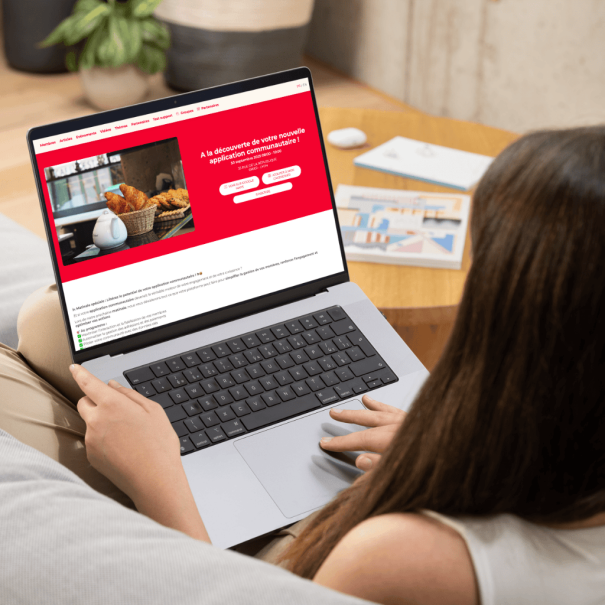
Community platform - diary and events

The preparation phase is too often seen as a simple logistical task: creating the event presentation page, managing registrations, sending out invitations, publishing the programme, etc.

However, it is the decisive moment for commitment.

With a community platform to help you event management, you're creating much more than a registration page: you're opening a digital space dedicated to the event where participants can :

  • discover the enhanced programme (video teasers, interviews with speakers, downloadable documents),

  • exchange ideas between participants or with the organisers via a forum, feed, comments, messaging...

  • ask questions beforehand, vote for themes or suggest topics.

This transforms the dynamic: your subscribers are no longer passive visitors but actors involved. You will then naturally increase the number of people present on the big day, while at the same time initiating the relationship by creating value upstream.

In terms of organisation, you get valuable data about their profiles, preferences and expectations...

These are all insights that can be used to segment your relaunches, personalise the experience and optimise your marketing campaigns.

Results: more registrations, more participants on the day, more precise targeting and a link that has already been established.

During the event: activate collective intelligence in real time
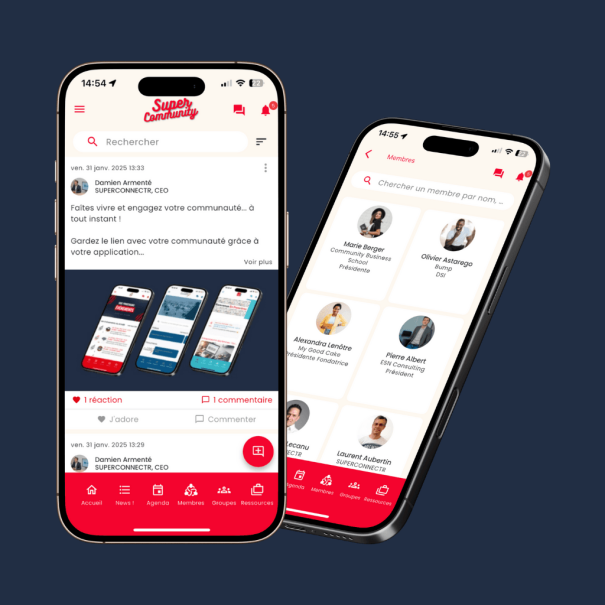
Community application - Community and Business Club

The event is not an end in itself. It is a time to meet, exchange ideas and make human connections.

This is where a community platform comes into its own: by making the experience fluid, interactive and personalised.

Depending on the performance of your chosen platform, and thanks to your community mobile application and / or your online community platform, you can :

  • Facilitate check-in, access and live logistics (badges, notifications, maps, QR codes),

  • disseminate practical information, announce highlights, solicit participants during the event...

  • create interaction between participants, speakers and partners (matchmaking, making contact, appointments, direct messages, discussion wall, etc.),

  • promote your partners or sponsors with dedicated areas, videos or offers that are just a click away,

  • manage the event behind the scenes with real-time dashboards (attendance rates, peak interaction, etc.).

Combining an event management solution with a community solution on a single platform is a major step forward. A strategic tool to help you manage, animate, capture attention and deliver a memorable experience.

Digital does not replace face-to-face: it reinforces it, extends it and makes it measurable.

As an event manager, engagement becomes visible, traceable and exploitable: every action is useful data for the future.

After the event: transforming attention into a lasting relationship
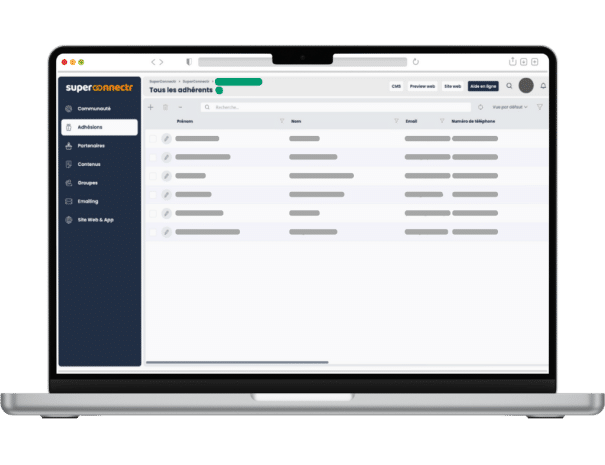
Association membership management software

It's the one thing most events forget: once the room is empty, everything stops.

No personalised reminders, little post-event content, no community to keep the conversation going.

And yet, this is where the real work of building loyalty and transformation begins.

Thanks to a genuine community approach and a dedicated platform to help you manage and animate your audience over the long term, you can create a long-term commitment, which extends the relationship :

  • posting replays and shared media online,

  • publication of on-the-spot feedback, post-event interviews and summary articles,

  • targeted reminders based on participation or interest,

  • re-engagement through discussions, follow-up quizzes or the organisation of more regular micro-events...

But above all, you collect commitment data rich: who attended, for how long, who interacted, who responded to surveys and polls, what topics were of most interest, etc.

These elements become a real segmentation lever for your CRM, marketing or sales campaigns.

The event is no longer just a date in a diary, but becomes the starting point for a long-term community strategy.

Is your event over? Now it all begins

The majority of professional event organisers make the same mistake: putting everything on the «big day» and then... cutting the link.

But it is precisely after the event that the real value creation begins.

A community platform allows you to extend the experience and capitalise on the engagement generated.

Thanks to the data collected during the event, you can obtain a precise map of the profiles and their areas of interest.

This enables you to segment your audiences, personalise your reminders, send the right content to the right people and feed your CRM with actionable data.

Replay of conferences, post-event discussions, satisfaction surveys, exclusive offers : so many opportunities to re-engage your participants, and turn them into active members, partners or customers. It can also be a starting point for monetise your community ?

A lively community after an event significantly increases conversion, retention and recommendation rates.

And thanks to a mobile application linked to your community platform, all personalised with your brand universe, you stay in your members' pockets, even once the stands have been dismantled.

Conclusion: event + community = winning strategy?
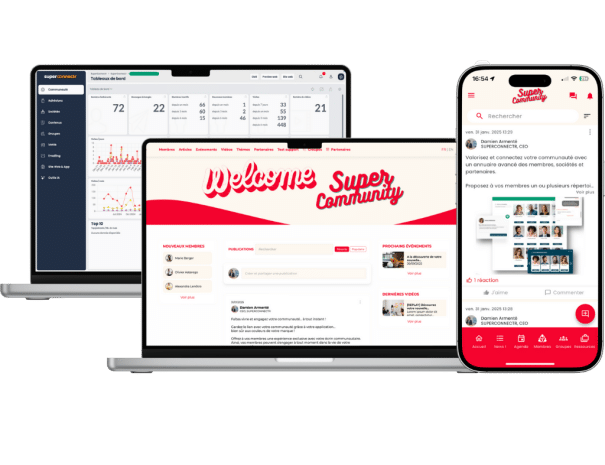
Online community platform and community mobile application

A professional event should never be an isolated act.

It reflects a broader dynamic: that of the building a sustainable, committed community.

All too often seen as a one-off event, this high point can, if well orchestrated, become the key to the success of the event. the start of a long-term relationship with your members, customers, partners....

This is where the community platform comes into its own. It acts as a link between the different phases of the event (before, during and after) and makes every interaction part of a a community marketing strategy that becomes a business asset.

You're no longer just managing participants: you're supporting members who you can turn into ambassadors or loyal customers/members.

By centralising content, exchanges and data in a single space, you can move from an event-based approach to a relationship-based strategy more sustainable, more profitable and more engaging.

Are you ready to move on from organising one-off professional events to building a long-term community? 

FAQ (Frequently Asked Questions) - Everything you need to know about organising events with a community approach

Do you organise events on a regular basis, or are you thinking about structuring your events strategy? Are you wondering how you can maximise the impact of your events, extend the experience beyond the big day, and make them a real driver of growth for your organisation?

Here are the answers to the most frequently asked questions to help you get the most out of your events, by integrating them into a community dynamic using a dedicated platform.

Is a community strategy only for large companies or associations?

Not at all. A community strategy applied to events can be deployed by all sizes of organisation ETIs, SMEs or VSEs, business networks, clusters, federations, professional associations, etc.

It's not your size that counts, but your desire to create links. A community platform allows you to professionalise your approach, save management time and maximise the impact of each meeting.

This is a structuring strategic choice for your organisation.

A mobile application for your community allows you to strengthen commitment, centralise interactions and keep control of your audience, while delivering a seamless experience that is consistent with your brand image

In both B2B and B2C markets, this is becoming a clear competitive advantage.

How does a community platform make a real difference to my events?

A Community Platform centralises all event relations: before (registration, teasing, notifications), during (live interaction, networking, mobile access) and especially after (replay, feedback, content, follow-ups).

You go from an ephemeral event to an ongoing experience, This will provide you with the data you need to better understand your members and personalise your future actions.

Is a community suitable if I only host a few events a year?

Exactly! If your events are rare, you need to maximise its impact.

A community allows you to maintain the link between two key moments, this will enable you to capitalise on what you've built up and avoid the «dashed in the ointment» effect.

The community platform is becoming the ideal marketing tool to create an ongoing presence and link, even outside events.

Can a community platform be used to manage registrations and participants?

Yes. A community platform like SuperConnectr integrates a complete registration management (customisable forms, quotas, access conditions), a real-time monitoring on D-day as well as accurate post-event statistics (participation rates, content sharing, feedback, etc.).

The event management solution is fully connected and integrated with the community space to create links before, during and after the event.

Can I really engage participants after the event?

Yes, it's even one of the strengths of the community approach.

Thanks to your platform, you can follow up participants with content (replays, photos, summaries), invite them to extend the discussions, encourage them to join discussion forums or even integrate them into relationship paths (newsletter, surveys, offers, etc.).

This allows anchor the event in a broader marketing dynamic.

What's the difference with a traditional events tool?

A classic events tool helps you organise. A community platform helps you to transform.

It goes further than logistics and event project management: the community platform helps you to build relationships over time, enhance the value of your members and partners, strengthen your brand or organisational positioning and helps you to structure a real community strategy.

Discover the SuperConnectr community platform!

An All-in-one Community Platform, 100% personalised with your Brand identity.

Give the members of your network a community web Platform and mobile App with your Brand to manage, engage and promote your community!
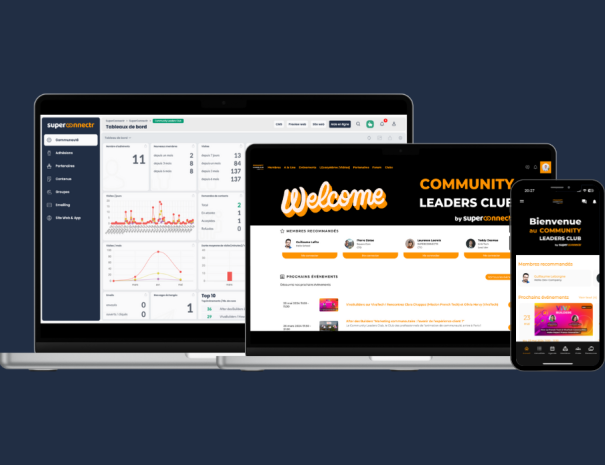
SuperConnectr: All-in-one community platform and application
Creating a community app

Community App: why and how to create yours?

Managing a community is an art. With emails saturating our inboxes and social networking algorithms limiting organic reach, a key question arises: how do you engage your members and maintain a direct, personalised and lasting link with your community? This is where creating a community app really comes into its own.

Thecommunity app is a powerful tool for transforming a simple audience into a community that is engaged, active and connected on a daily basis.

Accessible at all times in your members' pockets, a dedicated mobile app becomes a real extension of your brand universe if it is personalised in your colours. It centralises information, facilitates exchanges, simplifies event registration, promotes members and, above all : generates retention and better engagement.

But how to create your own community app ? What are the issues you need to be aware of, the features you need to prioritise and the best practices you need to adopt?
And above all, how can you avoid the common pitfalls?

In this article, we guide you step by step to understand :

  • Why is a community app a game-changer for your trade association or company?

  • How do you create an effective community mobile app?

  • How can you turn your app into a sustainable growth driver for your organisation?

Why create a community app?

Community application

Keep the link in your members' pockets at all times.

A mobile app gives you instant access to your community. The mobile has become the main anchor point of our daily digital lives. Your members consult their smartphone more than 80 times a day: this is an invaluable opportunity to make your community exist in this ultra-personal space.

Unlike newsletters, which are often ignored, or publications drowned out by news feeds, your app is a direct, personal and always visible channel with your logo on your members' home screen.

It is a powerful point of contact to maintain the link on a daily basis, reinforce the community reflex and improve the recurrence of interactions.

It's simple: what you see often, you come back to more easily. Being in your members’ pockets means being part of their daily lives. It also means strengthening themental anchoring of your community in their professional lives.

Increase engagement, recurrence and retention

Thanks to push notifications, your members are notified in real time of the latest news: upcoming events, publication of important news, exclusive content (articles, videos, podcasts, documents, etc.), etc.

The mobile app helps boost engagement effortless for the user. It becomes a reflex because everything is designed to encourage micro-involvement which is the foundation of sustainable commitment.


And over the long term, this recurrence is a major advantage. key to retention Active members stay. And they become your best ambassadors.

This responsiveness creates a strong sense of belonging and proximity, which is difficult to achieve with a simple website or newsletter.

A well-designed app, designed for mobile use, facilitates active participation :

  • quick read of the news,
  • simplified access to content,
  • simplified event registration,
  • easier participation in forums,
  • interactions at the click of a button,
  • fluent messaging,
  • instant (or almost instant) response...

Community involvement cannot be decreed. It is built through easy access, frequent use and quality of interaction.

Enhancing your brand and reinforcing the perception of value

In a B2B world wherebrand image plays a decisive role in reassurance and conversion, a branded mobile app is a must. A powerful differentiation tool..

Thanks to a mobile app with your organisation's colours, you can reinforce your visual identity and give your customers a sense of identity, body to your brand promise.

It's also a marker of professionalism and innovation: few organisations still have their own community app in the world of communities, whether as part of a trade association or a company. 

With this kind of community-building tool, you can show your members the esteem in which they are held thanks to this community showcase that you are offering them.

By offering your members exclusive access to a fluid mobile experience, you can increase their perception of value. This makes it easier to justify membership, loyalty or renewal.

Your community becomes a universe and your app is the gateway to it.

Centralise, automate and effectively manage your community

Association membership management software

A well-designed app is not a gadget. It is a a lever for productivity for your teams.

Combined with a comprehensive community platform, it becomes a focal point between the administrative management of your members and the running of your community.

You centralise profiles, events, discussions, content and communication campaigns.

You can segment, filter, target and automate all or part of the interactions.

The result: less scattering between tools (Google Forms, WhatsApp, Mailchimp, Excel, etc.), greater efficiency and more time to concentrate on the essentials: create value for your members.

With a view to industrialisation, an integrated community app becomes your best ally for scaling your organisation without multiplying the number of tools.

How do you create a practical, high-performance community app?

Community application - internal groups and sub-communities

Creating a mobile app for your community doesn't just mean having an icon in the App Store and Google Play Store.

The aim is to build a a white-label community management tool in your brand's colours, to create links and value, and boost member engagement. 

A community mobile app must be designed to serve your strategic objectives while making life easier for your members. Here are the key steps to follow.

Define the strategic objectives of your app

brand community marketing strategy

Even before tackling the technical or graphical aspects, it is crucial to define a clear, shared vision of your app.

Would you like to :

  • Retain your existing members?

  • Increase attendance at your events?

  • Generate new revenue through premium offers or reserved services?

  • Promote members and partners?

  • Simplify and automate the management of memberships and interactions?

  • Optimise networking and interaction between members?
  • Distribute and share your content more easily (videos, articles, podcasts, documents, news publications)?

Each objective implies specific choices in terms of functionality, ergonomics and monitoring.

By defining your priorities precisely, you lay the foundations for an app that is consistent with your community issues.

Beware: an app without a clear objective is an empty shell. An app that is aligned with your needs (and those of your members!) becomes a performance driver that will endure over time.

Create an app tailored to your needs, your resources and your autonomy

You have two main options: develop a customised community app or opt for a dedicated turnkey community platform such as SuperConnectr.

Tailor-made development can offer a great deal of freedom, but requires a substantial budget, long lead times and complex technical management.

A solution like SuperConnectr, on the other hand, gives you the benefit of a platform and an app that are easy to use. 100 % personalised with your brand universe, designed from the outset for communities, and rapidly deployable.

You keep control of administration via a complete Back Office, you can adjust rights, content and functionalities according to your needs and you save precious time by relying on a solution that has already been tried and tested by many organisations.

Concentrate on the value you bring to your members, not on the technical complexity that will take months to bring your community platform or app to life.

Prioritise high value-added functionalities

The success of a community app does not depend on the number of features offered, but on the relevance of these features to your members.

Your app should meet their real needs and make it easier for them to get involved in community life.

Here are the most important features expected in a community app:

  • Push notifications mass or targeted, that can be personalised for real-time information

  • Events calendar with registrations, descriptions, list of participants that can be activated for networking, addition to the calendar on the user's smartphone...

  • Internal community groups private or public to be customised by theme, sector, profession, geographical area, etc.
  • Instant Messaging or forums to encourage exchanges between members

  • Quick access to content, resources and news of the community

  • Interactive directories members and subscribers, companies or partners

  • Mobile interface modern, fluid and intuitive

On the administration side, make sure you can create different member statuses, customise data relating to member information, segment users, customise access rights, monitor usage statistics and easily manage communication campaigns (push notifications, automatic or targeted email campaigns, etc.).

It's better to have a few well-used features than a range that's under-utilised. Simplicity and efficiency are your best allies.

Take care of the user experience and the brand universe

Business Club application - Content

Your app is not just a functional tool. It is the digital expression of your community and your brand identity.

A successful user experience is based on :

  • Intuitive, frictionless navigation

  • A clear hierarchy of content

  • Simple, well-marked user paths

Above all, your app must reflect your brand universe colours, logo, editorial tone, vocabulary, typography...

Every detail counts in creating a coherent, professional and reassuring space.

At SuperConnectr, all our apps are white label Your members use an app that they feel has been developed entirely by your organisation. This level of personalisation reinforces the image of your company or your trade association, this is a key factor in the company's success.

The mobile app is a showcase for your community. Make it a place of excellence.

Prepare the launch of your community app

Launching your app is a crucial stage in ensuring that it is adopted. It's not enough to simply inform your members: you need to create a moment, a dynamic, a desire.

Here are a few best practices:

  • Organise a webinar or launch event

  • Create clear, illustrated tutorials that can be accessed via all your channels

  • Book exclusive content available only on the app

  • Involve the ambassadors in your community to carry the message

  • Reward the first active subscribers (bonus content, member portraits...)

The adoption rate in the first few weeks is crucial. The sooner your members find value in your site, the more likely they are to return.

How can you turn your app into a successful engagement lever?

Integrate the app into your acquisition and retention strategy

A community app should not be isolated from your communication ecosystem.

It can become a key channel in your conversion tunnel, particularly for BtoB communities.

For example, integrating the app into your welcome emails, webinars, email signatures or acquisition campaigns will help to increase adoption and usage from the very first contact.

It is also a lever for powerful loyalty. Your most active members receive key information, invitations to events and high value-added content directly on their smartphones...

Tip: create an onboarding sequence dedicated to new members to maximise adoption of your app from the very first days.

Defining your mission and objectives

Community mission

Before even launching the development of your community app, it is essential to clarify :

What are your objectives?

Do you want to recruit new members? Build loyalty among your existing members? Enhance the profile of your members or partners?
Your community's strategic objectives will guide the features to be integrated and the experience to be offered.

Examples :

  • A federation will be able to promote its members, centralise resources, news and events.

  • A alumni network will be looking to encourage networking, new contacts and reunions.

  • cluster will want to run its committees, share resources, disseminate its projects and create business interaction.

  • A company will aim to build customer loyalty through a customer community, engage its partners or facilitate the internal communication with employees, its resellers or partner network

What are your members' needs?

Mobile-first or not? Do your members expect to be able to chat, take part in events or access exclusive content?

Mapping these expectations enables us to build a truly useful app. It's also a good idea to segment the app by profile: the expectations of a Board member are not the same as those of a new member, partner or customer.

Use data to better understand and segment your members

One of the major assets of a community app connected to a web platform is data.

The app gives you real-time view to monitor your members' activity : opening notifications, taking part in events, analysing the most popular content, identifying active or inactive members, measuring the impact of your actions...

These insights are invaluable for fine-tuning your content strategy, pinpointing the topics that mobilise people, identifying members with high engagement potential or detecting weak signals of attrition.

By cross-referencing this data with your objectives, you can refine your segments, personalise your communication campaigns, create affinity groups, and thus propose a more relevant experience for each of your members.

Finally, by analysing mobile engagement data, you can steer your actions in a more targeted, agile way, with a data-driven marketing approach.

Enhance the value of your community to monetise your partners and members more effectively

A community app is also an external valuation tool. It allows you to show in concrete terms that you are leading, structuring and growing a committed community.

This is a major asset when it comes to convincing future partners, funders, sponsors or institutions. You show that you are equipped, modern and able to offer high added-value areas of visibility and commitment.

Your app can also become a revenue stream. You can suggest :

  • premium content or services reserved for certain membership levels,

  • sponsored pushes or visibility spaces in the application for your partners,

  • exclusive offers or privileged access to your events.

This added-value logic, coupled with a seamless mobile experience, strengthens members' interest in your offering and enables you to justify upgrades or more engaging partnership offers.

A mobile app for your community that is well designed, well animated and well exploited can increase the value offered to your members and partners.

Turn your community into a brand asset with a strong emotional bond

brand community brand building

Last but not least, your community is not just a channel for animation.

It is a strategic lever for your reputation and your business model. Thanks to your app, you can amplify your brand, create a strong sense of belonging and develop new services or offers for your members.

With the right approach, the community app becomes a valuable asset: it structures the relationship, generates retention, offers key data and fuels the evolution of your organisation over time.

The mobile is a personal, intimate, almost emotional support. A well thought-out, useful and user-friendly app that delivers value on a daily basis becomes a companion for your members.

By cultivating a fluid, human, warm experience - for example through inspiring content, rewarding interactions... you create a real sense of community. emotional connection between your members and your brand.

This bond is the foundation of a lasting community and organic growth through referrals.

In short, your community app can be much more than just a tool: it's a strategy accelerator, a pillar of commitment and a real marketing lever if it is thought of as such.

The key is to position it as a central element in your approach to member relations and to keep it alive over the long term.

Conclusion: creating a community app? A strategic pillar for your community

Application networking

Creating a community app is not just about ticking a technological box or following a trend.

It is a structuring strategic choice for your organisation, whether it's an association, a cluster, a federation, a business network or a brand for its customers or employees.

At a time when members are over-solicited by e-mail and social networks , create your own mobile space that is fluid, personalised and engaging, is becoming a real differentiator.

This allows you to keep control of your audience, create a direct and lasting relationship with your members and offer a coherent, embodied experience that reflects your image.

But beware: success is not based on technology alone. A successful community app is one that is part of a global community strategy, that adapts to the real needs of your members, that offers tangible value with every interaction and that evolves with you.

✅ It helps you to structure your member management.
✅ It makes it easier to’leadership and commitment on a daily basis.
✅ It supports your loyalty and growth.
✅ It opens up new monetisation opportunities.
✅ And above all, it contributes to boost engagement and your visibility.

Finally, don't forget : your app is not just another community-building tool.

The community app can become the beating heart of your community, A rallying point, a meeting place, a direct communication channel and a lever for collective mobilisation.

If you want to take the next step in structuring and animating your community, it might be time to take the plunge... and create your own community app.

FAQ (Frequently Asked Questions) - Everything you need to know about creating a community app

Are you planning to create your own community app or are you looking to better understand its potential?

Here are the answers to the most frequently asked questions to help you structure your approach, avoid the classic pitfalls and make your app a real driver of engagement, loyalty and growth.

Why create a community app?

Creating a community app is not simply a matter of following a technological trend. 

This is a structuring strategic choice for your organisation. A mobile app for your community allows you to strengthen commitment, centralise interactions and keep control of your audience, while delivering a fluid, consistent experience that reflects your image

In both B2B and B2C markets, this is becoming a clear competitive advantage.

Is a community app suitable for an association, cluster or federation?

Absolutely. Many structures such as clusters, professional federations, business networks or trade associations already use apps to:

  • promote their members and partners,

  • make communication more fluid,

  • make it easier to register for events,

  • develop differentiating services.

This allows you to move from a top-down logic to a bottom-up logic. active community experience.

Is a community app right for a business?

Yes, a community app is a powerful strategic leverage for companies, This goes far beyond simple social networks or traditional extranets.

It helps to structure and lead different types of professional communities, depending on your business challenges:

  • Customer Community: to develop loyalty, gather feedback, offer exclusive content, encourage advocacy and strengthen attachment to your brand.

  • Community of partners or resellers to facilitate exchanges, share product news, distribute sales materials, promote the network's best performers, run challenges and organise ongoing training courses.

  • Employee community (internal) The new "corporate culture": to boost your internal communications, encourage team commitment, animate your corporate culture and create a strong sense of belonging, particularly in multi-site groups or hybrid environments.

In short: a community app becomes a cross-functional tool for marketing, communication, training and relationship management, to help you achieve your business objectives.

How much does a community app cost?

Costs vary according to the solution chosen. 

With SuperConnectr, you get a white-label mobile app ready to use in 1 month, a personalised solution that reflects your brand universe as closely as possible. Your control your budget and the licence is all inclusive in the form of an annual licence, which simply varies according to the number of contacts and in line with the growth of your community. 

Ask our experts for a demo to assess your needs.

This is a simple, fast and effective alternative to custom development, These are often time-consuming, costly (several tens of thousands of euros) and difficult to maintain and upgrade.

What types of content or functions can be integrated?

The community app can incorporate :

  • news from your network, association or company,

  • content that is easy to consume (snack content marketing, podcasts, etc.)

  • a calendar of events,

  • messaging or chat,

  • a directory of members, companies, etc,

  • thematic or regional groups,

  • targeted push notifications,

  • premium access, etc.

Everything is designed to create links and to promote your community over time.

Does a community app replace the website or social networks?

No, it's a strategic complement

The site remains a public showcase and a web community platform will be ideal for sharing and consulting professional and collaborative resources. 

The mobile app is now your private community consumption space, reserved for your members or customers. 

It allows you to create a direct and unintermediated relations, where social networks filter your reach and emails are drowned in the mass. Finally, it allows your brand to be in your members' pockets at all times.

Discover the SuperConnectr community platform!

An All-in-one Community Platform, 100% personalised with your Brand identity.

Give the members of your network a community web Platform and mobile App with your Brand to manage, engage and promote your community!
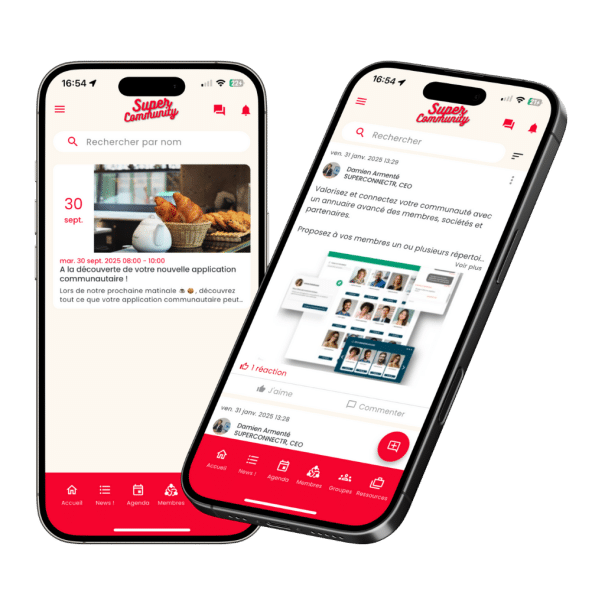
SuperConnectr: All-in-one community platform and application
Monetising your community from an audience: how to understand and choose the right model?

Monetising your community from an audience: how to understand and choose the right model?

Brands and creators have never produced so much content. However, despite sometimes massive audiences, few manage to monetise their community in a sustainable way.

Many succeed in capturing attention, generating traffic and accumulating subscribers - but without transforming this audience into a solid economic lever.

Because an audience can be measured, whereasa community enhances itself. An audience watches, a community acts. And it is precisely this ability to monetise your community, It's not just about attracting visitors, it's about making the difference between visibility and influence, between communication and impact.

Visibility is no longer enough: it attracts, but does not create loyalty. It exposes, but does not transform.

In an environment where attention is becoming volatile and competition intense, monetise your community is not an option: it's a requirement. marketing strategy for independence and growth.

Creating a community means moving from a distribution approach to a relationship approach. It's about building a space where we share, where we exchange, where members become part of a brand universe. And it is this transformation - from audience to community - that makes the monetization not only possible, but natural and sustainable.

From audience to community: the keys to monetising your community over the long term

From audience to community - the key to sustainable monetisation_.

For years, brands and the media have built their strategy on the logic of distribution.

The aim is to reach as many people as possible, maximise reach, increase awareness... and hope to turn this audience into customers.

The audience was the grail, the absolute KPI. The bigger the audience, the more effective the strategy. But this approach, based on quantity, is now showing its limitations.

A audience, by definition, remains an audience exposed to a message. It consumes content, sometimes reacts to it, but does not make a lasting commitment. They are volatile, dependent on platforms and algorithms.

In BtoC, this means consumers who are attracted by campaigns but have little attachment to the brand. In B2B, it means prospects who get information, download a white paper, attend a webinar... and then disappear.

The real creation of value is no longer to be found in the exhibition, but in the relationship, proximity and exclusivity. And this relationship is not built with an audience, but with a community.

The community is based on trust, reciprocity and proximity. Where the audience watches or follows, the community interacts and engages. Where the audience listens, the community expresses itself.

For brands, moving from audience to community means changing their approach: no longer “talking to”, but “talking with” and «doing with».

This semantic shift illustrates a profound transformation in marketing. We're no longer just selling a product or an idea, we're sharing a world, a cause, an experience.

And this experience becomes the basis of a sustainable monetisation, because it is based on a strong emotional bond that is difficult to copy.

It is this link - this relational capital - that enables the brand to create higher-value offers: subscriptions, exclusive access, clubs, training, events or partnerships.

In other words, monetise your community, It means moving from an economy of attention to an economy of trust and experience. You create a community experience, a brand experience.

Assess the maturity of your audience before monetising your community

Assess the maturity of your audience before monetising it

Before wanting to monetise your community, it is essential to understand whether its audience is ready to take this step. You can't create a profitable community simply by making a marketing decision. It is built gradually, as the link between the brand and its members is strengthened.

An immature audience is one that consumes content without interacting with it.

They watch, like and sometimes share, but without any real commitment. These audiences are numerous, but fragile: they depend on the rhythm of publications, algorithms and current trends. In this case, any attempt to monetise them is likely to fail for lack of a sufficient link.

Conversely, a committed audience is showing clear signs of community maturity They comment, react, take part in events, ask questions and suggest ideas.

These behaviours reflect a need for proximity, a desire to belong. It is the fertile ground on which a community can grow.

BtoC, This maturity is often expressed by fans or customers who have followed the brand for a long time, are familiar with its codes, defend its values and share its content spontaneously.

BtoB, This is expressed through a network of customers, partners and experts who regularly exchange ideas, take part in meetings or co-construct projects with the brand.

In both cases, the audience becomes a living base, ready to evolve into a community model.

It is at this precise moment that the monetization becomes possible, not as a commercial act, but as a natural extension of the relationship.

Members no longer feel that they are “paying” for access to content, but that they are ’paying' for access to content.’investing in an experience, in a sense of belonging. They join a community because it brings them value, connection and meaning.

To identify this balance point, it is useful to observe the dynamics of your audience: the commitment rate, the recurrence of interactions, the nature of exchanges, and the extent to which initiatives come from the members themselves.

These indicators reveal the potential of community monetisation. The more the community acts autonomously, the more it is ready to organise itself around an offer: subscription, premium club, platform or partner programme.

It is in this analysis phase that the difference is made between a brand that “sells to its audience” and a brand that creates value with its community.

One seeks to convert, the other to build. And in a context where loyalty is earned through trust, This distinction makes all the difference.

Community monetisation models

Community monetisation models

Once the community marketing strategy defined, the structuring the community and the expectations of future members the question becomes one of model.

How to monetise your community without betraying its original promise? How can we create economic value while reinforcing relational value?

The answer lies in consistency The right model is one that naturally extends the experience of members.

Subscription or membership

Probably the most common, it is based on a simple logic: privileged access to a community through a subscription or membership (monthly, quarterly, annually, etc.).

A brand, a media outlet or an association offers its members an exclusive space such as a community platform or a community app We offer a range of personalised services that are as close as possible to the brand's universe, with premium content (news, articles, videos, podcasts, documents, etc.), meetings, training courses, advantages and customised services.

This model works just as well for a BtoC brand (such as a club of enthusiasts, a lifestyle brand or a community of users) as it does for a BtoB brand (professional network, circle of expertise, shared innovation platform).

In both cases, members don't just pay to consume: they invest in belonging to a group that brings them value.

Events

Physical or digital meetings (conferences, trade fairs, workshops, afterworks, private parties, product launches, etc.) are all opportunities to create links while generating direct or indirect income.

Ticketing, premium offers and partnerships associated with these events enhance the experience. The event then becomes a cornerstone of community monetisation It consolidates commitment, amplifies visibility and nurtures loyalty. 

Of course, you'll need a event management tool to orchestrate these community experiences.

Sponsorship and brand partnerships

Particularly interesting for the media and influencers. Here, the brand leverages the strength of its community with third parties. The sponsor no longer pays just for an audience, but for access to a committed, credible, influential community with the potential to act as ambassadors.

This approach transforms monetisation into a lever for collaboration: it makes it possible to finance content production and improve the member experience, while offering the partner contextualised and legitimate visibility.

Training and knowledge transfer

In professional circles as well as in communities of enthusiasts or learning communities, sharing expertise has a high perceived value.

Offering workshops, masterclasses, support programmes or skills enhancement courses creates income while strengthening the community's mission.

Here again, the monetising your community is not experienced as a purchase, but as mutual enrichment.

Calling on a managing and leading a learning community becomes crucial for sharing your extensive content with your members = articles, videos, podcasts, documents...

Hybrid models

Finally, some communities find their equilibrium in hybrid models.

They combine several sources of revenue: subscriptions + events + sponsorship, for example. This mix offers both stability and diversity. It secures growth while maintaining consistency between the brand, its audience and its partners.

In all cases, the success of a community monetisation is based on a central principle: value must always flow in both directions.

A brand that knows how to listen to, involve and recognise its community creates much more than income: it builds trust..

And in a world where loyalty is measured in terms of churn reduction and the customer retention, commitment becomes a precious asset.

Building a balanced and sustainable community monetisation model

Building a balanced and sustainable community monetisation model

The success of a community monetisation is not just measured in the short term.

What distinguishes an opportunistic approach from a long-term model is the brand's ability to strike a balance between economic value and relational value. In other words, monetise your community must not undermine the trust that is its strength.

That's why we now talk about« Community Building »It's all about building a sustainable community on solid foundations.

Sustainable monetisation is based on a logic of exchange. Members must feel that their contribution, whether financial, attention-grabbing or emotional, brings them an enriching experience in return.

This can be a sense of belonging stronger, access to exclusive advantages, participation in collective projects or the possibility of’learn and progress.


The challenge for the brand is to create a model where value flows in both directions: the more members get involved, the more they gain from being members, and the more the brand gains. a stronger community.

A living community is not just about an offer or a transaction, but about a a set of interconnected experiences and relationships.

Each lever (content, event, programme, partnership, etc.) contributes to a coherent whole. Visit monetization then becomes a natural extension rather than a bait-and-switch add-on.

The strongest communities operate on a principle of’circular economy The brand invests in the creation of value (content, tools, support), and members get involved and contribute in turn, generating revenue that is reinvested in improving the collective experience.

This virtuous circle transforms the community monetisation into a continuous commitment engine.

For the BtoC brands, This can mean developing experience clubs or exclusive offers that enrich the bond with loyal customers.

For the BtoB brands, This is often an opportunity to build a genuine professional hub, A place where partners, customers and experts come together to work on high added-value projects.

In both cases, the monetization is no longer based on the sale of a product, but on the creation of a lasting, contributory relationship.

Ultimately, the key is not to «charge» your audience, but to involve your community in an experience sincere and meaningful.

It is this cultural shift from transaction to collaboration that transforms a marketing strategy into a resilient business model.

Monetising your community: towards a new relationship economy?

Online community platform and community mobile application

Monetising your community is no longer simply a question of income: it's a change of culture.

At a time when attention is fragmenting and audiences are becoming volatile, the real wealth of a brand no longer lies in its visibility, but in the solidity of its links.

It's no longer the size of the audience that counts, but the quality of the relationship it has with them.

Turning an audience into a community, It means rethinking the very way in which value is created. It's no longer just talking to an audience, but coexisting with them. It's no longer about selling a product, but about build an experience. And in this experience, monetisation becomes a means of strengthening the link, not of monetising it.

This new relationship economy is based on trust, transparency and reciprocity. Brands that succeed in monetise their community without distorting it are those who understand that a financial contribution is not a purchase, but a form of commitment.

Members don't pay to consume, they participate in a project, a vision, a shared history.

At a time when companies are seeking to reconcile performance, meaning and independence, the community monetisation is emerging as a model for the future. It frees brands from dependence on platforms, while creating more sustainable value based on human relationships.

Perhaps we are now witnessing the end of the “attention economy” and the emergence of a new 'attention economy'. relationship economics, where value is no longer measured in clicks, but in trust?

FAQ (Frequently Asked Questions) - Everything you need to know about monetising your community

You are discovering community monetisation or are you looking to structure your strategy? Here are the answers to the most frequently asked questions to help you better understand how to monetise your community, transform a audience into a genuine driver of value and build a sustainable business model based on relationships.

What is community monetisation?

The monetising a community consists of transforming the relational value created between a brand and its members into economic value.

Unlike traditional advertising, the aim is not to sell visibility, but to building trust by offering subscriptions, exclusive quotes, premium services, events, training and partnerships.

It's a strategy based on reciprocity: members receive an enriched experience, the brand benefits from a sustainable source of income.

What is the difference between an audience and a community?

A audience is a group of people exposed to a message. They listen, watch and consume content.

A community interacts, exchanges and contributes.

Audience is measured in reach, community is measured in engagement.

For monetise effectively, It is therefore essential to move from a distribution approach to a relationship approach: this link is the basis of any sustainable monetisation.

Why has monetising your community become essential?

Because the visibility model alone is no longer enough. Algorithms are changing, platforms are controlling reach, and audiences are increasingly volatile.

Monetising your community allows you to secure your relationship with your audience, create recurring income and increase your independence.

It's also a way of deepening the relationship: paying members are often the most committed, the most loyal and the most contributors.

What are the main monetisation models?

The models of community monetisation vary according to the type of audience and the brand's positioning:

  • Subscription or membership (access to content, benefits or an exclusive area, etc.)

  • Events (meetings, masterclasses, trade fairs, premium experiences, etc.)

  • Sponsorship and brand partnerships

  • Training and sharing expertise

  • Affiliation and recommendation

Success does not depend on the model chosen, but on its consistency with the needs of the community and the value offered.

Can a small community be monetised?

Absolutely. A community doesn't have to be huge to be profitable. What counts is the commitment rate and the quality of the link between the brand and its members.

Many niche communities (in the automotive, sports, tech, cultural or entrepreneurial sectors) generate significant revenue thanks to strong relationships and tailored offers.

It's better to have 500 active members than an audience of 50,000 passive people.

How do you know if your community is ready to be monetised?

A community is ready to be monetised when it shows signs of strong commitment: regular participation, spontaneous interactions, constructive feedback, mutual support between members, requests for exclusive content or events.

These behaviours reflect a need for a link and an established level of trust. Monetisation then becomes natural, because it is seen as a way of enriching the experience, not limiting it.

What mistakes should be avoided when monetising a community?

The most common errors are :

  • Seeking to monetising too early, before creating a committed base.

  • Imposing a business model without listening to members' expectations.

  • Forget about transparency regarding the destination of income.

  • Confusing monetisation with marketing.

The community monetisation is based on clarity, trust and shared value.

What tools should you use to monetise your community?

The choice of community platform is crucial. Solutions such as SuperConnectr, allow you to host, manage and lead a community, while integrating monetisation functions: subscriptions, ticketing, premium space, etc.

SuperConnectr combines a showcase and media site to attract, a community platform to hire and a community mobile application for a seamless experience at all times 100% in your organisation's colours. 

A a tool for monetising your community an ideal way for brands, content creators and associations to manage their members, rules, events and offers.

Discover the SuperConnectr community platform!

An All-in-one Community Platform, 100% personalised with your Brand identity.

Give the members of your network a community web Platform and mobile App with your Brand to manage, engage and promote your community!

SuperConnectr: All-in-one community platform and application
Brand Community: why and how to create your own community?

Brand community: why and how to create your own community?

Today's consumers are increasingly looking for authenticity and commitment from companies. The brand community is becoming a major strategic lever in a marketing plan. It enables companies to unite their customers, partners and supporters around a shared vision, a shared universe and shared values.

Unlike social networks, where you have no control over data, formats or algorithms, a brand community allows you to regain control.

In this article, find out how a brand community can strengthen your marketing strategy, build loyalty among your members and become a sustainable business asset, whether you're in B2B or B2C.

What is a brand community?

A brand community is a a group of people united around a company, a product or shared values. Unlike an audience (which is often passive), a community is active, committed and a co-creator of value.

It can take different forms: customer community loyal customers, ambassadors, partners, regular users, employees, etc.

The brand community can be :


What distinguishes a brand community?

  • A long-term commitment

  • Interaction between members and with the brand

  • The desire to belong to a group

An audience reads, a community acts. 

On social networks, you manage an audience, whereas on your own platform dedicated to your brand community, you manage... a community! That's why it's often said "that we are a community.

Why create a brand community?

brand community brand building

Creating a brand community means that the customer relationship can evolve from a transactional link to a relational one. Here are the main advantages:

1. Regain control of your brand image

On social networks, the rules of the game are constantly changing: opaque algorithms, automated moderation, imposed formats, diminishing visibility... Brands have become hearing tenants that they don't have.

Conversely, creating a community platform (community website, mobile application, etc.), it means becoming owner of the experiment.

This way, you are no longer dependent on the rules imposed by social networks and you regain control:

  • You decide on your brand identity (branding).We'll take a close look at your website, your graphic charter, the navigation, the tree structure, the editorial tone and the visuals.

  • You build an environment that reflects your image and is consistent with your brand positioning.

  • You avoid the dependence on third-party platformswhich can cut your reach overnight.

  • You retain control over your marketing contentyour formats, your tone

  • You regain control over the value of member data (profiles, registrations, emails, behaviour, etc.)


Regaining control:It also means mastering the narrative around your brand, rather than being subject to the interpretation of others.

2. Building customer loyalty and a sense of belonging

A community gives your customers or users an active role. 

By allowing them to talk to each other, ask questions and share success stories, you are building a relationship of trust. a lasting relationship of trust

This will improve retentionreduce the churnand develop a more committed customer base.

A community creates a form of emotional closenesswhich is far more powerful than a simple CRM. It transforms the relationship with the brand into human and social relations.

When a customer feels listened to, valued and connected to other members, they become :

  • less price-sensitive,

  • more tolerant of errors,

  • and above all more loyal.


Direct marketing benefits :

  • Higher retention rate,

  • More frequent repeat purchases,

  • Unsolicited recommendation - customer advocacy (Net Promoter Score effect).

Reminder Loyalty is not just a discount card. It is a lasting connectionwhich involves interaction and recognition.

3. Develop ambassadors

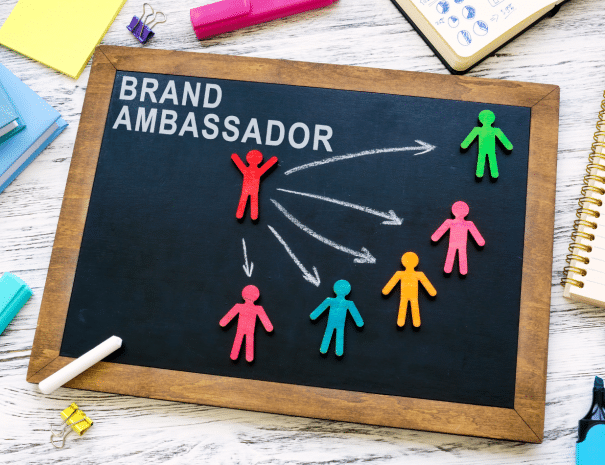
brand ambassador community and advocacy

In every community, there is a "natural elite": those who respond, share, help and speak out. These are your ambassadors..

A well-run community naturally reveals its key members: those who get involved, speak out and defend your brand.

By promoting them (interviews, VIP access, rewards), you create powerful ambassadors who will promote your brand to their network.


Why is this an asset?

  • The ambassadors have a natural legitimacy with their peers

  • They can relay your contenthosting your events or mentoring

  • They contribute to scalability for your event


Identifying ambassadorsis :

  • monitor qualitative activitynot just quantitative,

  • observe initiative-taking (content creation, animation, spontaneous moderation),

  • detect influencers sometimes discreet but very credible.


Why activate ambassadors?

  • They create confidence with others.

  • They become your relaysyour testers, your speakers at events.

  • They multiply your efforts animation.


Operational advice structure a ambassador programme with clear roles, benefits, recognition and contribution tools .

4. Create a space for co-creation and innovation

Your members are a source of ideas. Products, services, content...

They can help you improve your offering. By involving them, you develop a unrivalled proximity and feed a participative marketing.

A well-run community becomes a think tank. Rather than dreaming up innovations in a vacuum, why not build them with the people who experience your products or services on a daily basis?

Examples of co-creation in a community :

  • Surveys to test a concept

  • Calls for ideas or community challenges

  • Collaborative workshops

  • Votes for roadmap priorities


Strategic benefit This type of approach increases buy-in, reduces the risk of product failure, and gives rise to genuinely desired innovations.

Remember: a brand that listens and acts gains legitimacyand in sympathy capital.

5. Offer exclusive, high-quality content

brand community content marketing

Unlike social networks, which favour short, viral and sometimes superficial formats in which everything is public, a community deserves to be recognised. quality, targeted contentdesigned to last.

A a platform dedicated to your brand community offers :

  • exclusive content (expert videos, interviews, previews, behind-the-scenes, live shows, photos, advanced tutorials, revelations...)

  • from reserved resources to members (webinars, white papers, podcasts, etc.)

  • deeper exchanges in a secure space

  • a personalised experience that reinforces perceived value


Immediate effect : Exclusivity creates perceived value, and provides a good reason to remain active over time.

Bonus: this content can be reused for nurturing or sales pitches.

6. Building a relational and sustainable brand

At a time when people are increasingly distrustful of brands, your customers expect your brand to create ever more trust and authenticity through your customer relationships:

  • proof of commitment,

  • transparency,

  • the sincerity of exchanges

... to create a a long-term relationship of trust.

When your members say "I'm part of this brand" or "I'm proud to be a member", you've gained more than a customer: you've gained an ally.

And of course, this changes everything in your marketing, recruitment, communication... and your sales results.

7. Structuring a premium member base

With a community, you can also develop a subscription model, membership or reserved access platformcreating new sources of revenue, data and qualified interactions.

A brand community doesn't just mean running a free database: it can also be direct monetisation leverage.

By structuring a premium member baseyou offer more value to those who are prepared to invest more... and you create a sustainable business model.

What is a premium member in a community?
This is a member who has access to reserved services, content, events or advantages, often via :

  • a monthly or annual subscription,

  • membership of a specific programme,

  • access by invitation or co-option.

Possible advantages of a premium model for a community :

  • Early or exclusive access to content, products or events,

  • Participation in small groups, masterminds and round tables,

  • Greater visibility in the community (badges, status, roles),

  • Partner benefits (discounts, third-party services, gifts, etc.).

Why structure a "premium" membership base for a community?

  • This enhances the value of your expertise and your content,

  • This selects the most committed and qualified members,

  • This creates a club effect (social proof, rarity, status),

  • This generates recurring revenue while strengthening commitment.

Possible economic models for a community :

  • Freemium subscription (free access + paying options),

  • Corporate offer (premium access for company teams),

  • VIP event packs,

  • Ambassador Club by selection or sponsorship.


Worth noting: This model assumes platform that makes it easier for you to member and subscriber management access rights and personalised experiences, payments, segmentation... while complying with the RGPD.

8. Regain control over your marketing data

brand community data marketing

Marketing and social data (likes, comments, subscribers and profiles) are fragmented, difficult to exploit and often inaccessible in detail.

On a community platform, you have access to first-party data structured and precise.

What is First-Party Data?

The first-party data are the information collected directly by a company from its users, customers or prospects.This is done via its own channels: website, mobile application, registration form, community platform, e-mail interactions, etc.

Unlike third-party data (from external sources) or second-party data (from a partner), first-party data is :

  • reliablebecause they are collected at source,
  • relevantbecause they are directly linked to the brand's ecosystem,

  • RGPD compliantif collection is transparent and voluntary.


Yourirst-party data for your brand community allow you to :

  • Mapping your community types of members, browsing patterns, frequency of connection.

  • Measuring real engagement What content, what formats, at what times?

  • Identifying weak signals Topics on the rise, emerging trends, sticking points.

Marketing use cases :

  • Create segments for personalised nurturing.
  • Prioritise offers or events according to real, not assumed, expectations.
 

Tip A good community strategy includes an analytical dashboard from the outset to manage the activity.

Brand community: BtoB vs BtoC

The fundamentals are the same, but the dynamics may differ depending on the type of brand community you have:

BtoC :

  • Strong emotional dimension (sport, beauty, lifestyle)

  • More rhythmic, event-based entertainment (live shows, customer events, games)

  • More influence (UGC, ambassadors, customer reviews)

BtoB :

  • More expert communities, often vertical (sector, business, issues)

  • Objectives: networking, exchange of best practice, monitoring, collaboration

  • Greater expectation of added value in content (white papers, training, feedback)

In both cases, the community becomes a differentiating factoroften copied but hard to match.

How do you build your brand community?

brand community marketing strategy

Here are the main steps in building a solid community:

  1. Defining your Mission and Vision: What will your community be used for? Who is it for? Why now? How does it bring people together? Why should members join you (the famous "Why")?

  2. Define your objectives: The brand community must also meet marketing, sales and HR objectives. It's up to you to determine the right KPIs. Be careful: objectives can be both quantitative and qualitative!

  3. Choose a dedicated community platform and/or mobile application : independent of social networks, your community website and / or your community mobile application must be customised at 100% with your brand identity and graphics, your marketing content, adapted and customisable functionalities according to your needs... 

  4. Identify the first strategic members: Loyal customers, motivated partners, committed employees, ambassadors and enthusiasts...

  5. Offer regular content and interaction: news, resources, events, thematic groups...

  6. Encouraging initiative: Let the members have their say. Co-create the formats with them and don't forget to thank them!

  7. Measuring and valuing: Keep track of commitment, participation and retention rates. Thank and reward those most involved.

What's next? Towards 100 % community marketing

Online community platform and community mobile application

Brands can no longer just send out messages. They must create spaces for dialogue, experiences and co-construction. Community-based marketing is no longer an option, it's a core strategy.

What if your brand became a a place to live, exchange ideas and draw inspiration for your customers, partners and members?

SuperConnectr can help you create a 100 % community platform in your coloursa thought for your business modelyour loyalty challenges and your brand image.

FAQ (Frequently Asked Questions) - Everything you need to know about the brand community

Are you new to community marketing or looking to convince your in-house teams? Here are the answers to the most frequently asked questions to help you better understand the benefits and mechanisms of a brand community.

What is a brand community?

A brand community is an active group of people united around a brand, its values, its products or its vision.

Unlike an audience, a community is involved, interacts, co-constructs and generates value. It can include customers, partners, employees and even fans.

What is the difference between audience and community?

Theaudience is often passive: it reads, watches or consumes your content.
The communityA community is active: it exchanges, comments, contributes, defends or even co-produces. An audience receives, a community interacts.

What are the advantages of a brand community?

There are many advantages to a brand community:

  • Long-term customer loyalty

  • Natural recommendation (word of mouth)

  • Creation of content by members (UGC)

  • Regaining control over data and formats

  • Identifying powerful ambassadors

  • Opportunities for co-creation, innovation and monetisation

Is it just for the big brands?

Not at all. Any organisation - start-up, SME, association, local brand or BtoB - can create a community. What matters is the intention, the value to members and the consistency with your positioning.

Which platform should you use to create a community?

The ideal is a community platform personalised with your brand colourswith tailored features: member profiles, segmentation, exclusive content, analytics, events, roles and rights.
Example: the SuperConnectr platform enables you to create a customised community space (community website and mobile application), whether you are a company, a federation or a brand.

Discover the SuperConnectr community platform!

An All-in-one Community Platform, 100% personalised with your Brand identity.

Give the members of your network a community web Platform and mobile App with your Brand to manage, engage and promote your community!

SuperConnectr: All-in-one community platform and application
BtoB Community:the Business Asset of Community-Based Marketing

BtoB Community: the Business Asset of Community-based Marketing

Create a BtoB community, in an increasingly competitive professional environment is becoming a business asset that should not be overlooked.

Differentiation is no longer based solely on the product or the price, but on the quality of the relationship and trust between the customer and the service provider. And this bond is the community that wears it.

A community marketing is becoming an essential strategy for engaging customers, partners and resellers, while boosting growth.

In this article, find out why and how a BtoB community, can become your best business asset.

Definition: what is a BtoB community?

A BtoB (Business to Business) community is a group of professionals, customers, partners or stakeholders gathered around a companya product,a service or a common challenge.

Unlike a simple audience, a community is active, committedand contributes to the creation of value for the ecosystem as a whole.

A BtoB community can include :

  • From customers who share their feedback, best practices and ideas for improvement around a software or solution: it's a customer community.

  • From business partners (resellers, integrators, franchisees, etc.) who together develop a lasting relationship with the company

  • From members trade unions or federations wishing to pool their expertise: this is a trade association or a cross-industry trade union.

  • From experts gathered in clusters, competitiveness clusters or business clubs.

The BtoB community, marks the transition from a linear commercial relationship to a a collaborative, lasting relationship based on trust.

Why create a BtoB community?

B2B community

Creating a BtoB community means taking a gamble on long-term commitment. It means building a trusting, lasting and proactive relationship with its members.

Here are the reasons why creating your own BtoB community will become an essential business asset for your organisation:

Create a strong, lasting bond with your customers

btob community link building

In a context where offers are increasingly similar, it is the quality of the relationship that makes the difference.

A community allows you to go beyond the transaction. It turns your customers into partners, ambassadors and co-builders. You become a benchmark, a point of reference in their day-to-day professional lives.

Result: a higher retention rate and a churn reduction significant.

Valuing the voice of the customer

The members of your community have a voice. And that voice is precious.

By giving them a place to express themselves, you can feed your strategic thinking, your product roadmap and your customer service. They become co-players in your growth, and their testimonials reinforce your credibility and their suggestions for fine-tuning your offerings.

In short, they enrich your vision and your business over the long term!

Speeding up mutual assistance and support

An active community becomes a natural support lever. Your customers can talk to each other, share best practice and answer questions. 

Fewer tickets for your support team, more satisfaction for your users. All in a friendly atmosphere where everyone feels useful and recognised.

Identify your strategic customers

Community platform for business : Customer community

In a lively community, the most active members naturally emerge. These are often your future ambassadors.They are your beta testers, your referents. They embody your brand and become powerful relays of influence

By promoting them, you can consolidate your reputation and influence in theBtoB ecosystem.

Developing innovation and co-creation

A BtoB community is a formidable laboratory of ideas. 

By involving your members in the design of your future offers or functionalities, you gain in relevance and identify real needs. You innovate faster and more accurately. 

Co-creation becomes a performance driver and a differentiating factor.

The different types of BtoB communities

Each BtoB company can develop its own community model, depending on its target, its business and its mission. Here are a few formats:

  • Customer Community: A forum for users of the same product or service. Objectives: building customer loyalty, support, co-development.

  • Community of partners: A collaborative space for distributors, resellers and franchisees. Objectives: resource sharing, network animation, commercial synergies.

  • Community of members: A structure dedicated to the members of an association or trade union. Objectives: commitment, pooling, representativeness.

  • Community of experts: A network of professionals focusing on a particular theme or issue. Objectives: collective intelligence, monitoring, influence.

  • Community of learners: A continuous educational dynamic for trainees or alumni of a training organisation. Objectives: skills enhancement, mutual support, professional network.

Each type of community has its own specific features, but they all share a common foundation: creating value through human relationships.

How do you run an effective BtoB community?

Community animation objectives

Creating a community is one thing. Managing it is quite another. It requires a clear strategy, dedicated human resources and a long-term vision. Here are the key levers for keeping a community alive and engaged:

Setting the tone and establishing a culture

A community needs reference points. It needs to understand its purpose, its mission, its rules, its mindset. 

Create a community charter.Make your values clear. Create an atmosphere where people can speak freely and where everyone feels legitimate.

Offer a variety of interaction formats

Events, webinars, surveys, forums, videos, newsletters, podcasts, article publications... 

The more diversified your channels, the more you can reach all your members according to their preferences. Interaction should be simple, accessible and regular.

Promoting the most committed members

Don't hesitate to showcase your ambassadors: testimonials, interviews, badges, exclusive access, etc. 

Recognition is a powerful driver of engagement. It turns occasional contributors into pillars of the community.

Keeping things lively

A community that falls asleep is a community that dies. 

Hence the importance of a Community BuilderThey are responsible for stimulating, relaunching and connecting. He or she is the guarantor of the link and the catalyst of collective dynamics.

Offering a dedicated community platform

The community management and animation tool plays a key role. A good community platform allows you to centralise exchanges, distribute information, organise events and connect members. 

good community management software will help you to structure and industrialise your business on a day-to-day basis, in particular by automating your various management and promotion tasks. 

Finally, choose a community-based solution that offers you a community website and a community app (on smartphones) so that your platform can adapt to your members' uses and expectations of engagement. 

This community platform must be customised to your image and colours to reflect your brand a real game changer for developing a sense of belonging.

Community animation tool

Conclusion: a strategy for the future for BtoB companies

The BtoB community is a powerful lever that is all too often under-exploited. It transforms a passive audience into an active, engaged, co-creating network. It embodies a new way of looking at marketing. customer relations: more human, more horizontal, more sustainable.

By investing in a community strategy,BtoB companies are gaining in commitment, loyalty and influence.

Are you ready to make your community your best business asset?

FAQ (Frequently Asked Questions)

What is a BtoB community?

A BtoB community brings together professionals around a common company, product or issue. It fosters commitment, collaboration and co-creation within a professional ecosystem.

Why create a BtoB community?

Creating a BtoB community helps to build customer loyalty, strengthen relationships with partners, accelerate innovation and promote the most active members.

What is the role of the Community Builder in BtoB?

The Community Builder is responsible for animating and developing the community. They connect members, stimulate exchanges and ensure that everyone finds their place in the ecosystem.

What's the difference between community and audience?

An audience is passive: it receives your content. A community is active: it interacts, contributes and creates value with you.

Discover the SuperConnectr community platform!

An All-in-one Community Platform, 100% personalised with your Brand identity.

Give the members of your network a community web Platform and mobile App with your Brand to manage, engage and promote your community!
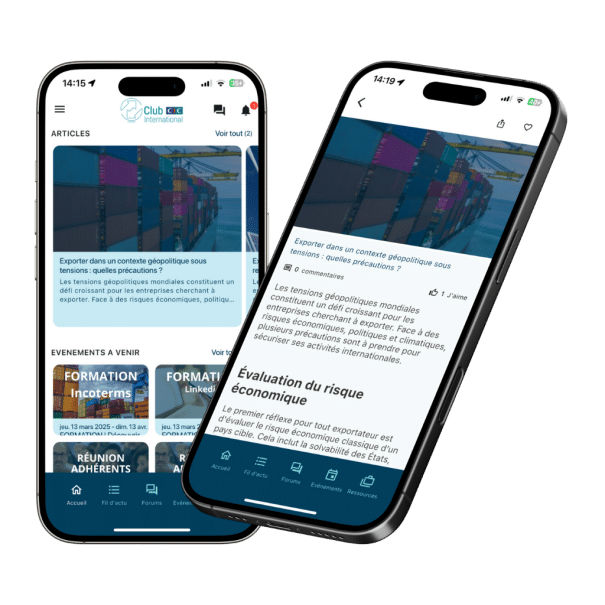
SuperConnectr: All-in-one community platform and application
Online Community Platform: create a Website Community to Engage your Members

Créer un site web communautaire : créer un site en ligne pour engager vos membres

Créer un community website is much more than just a showcase site: it's a digital space dedicated to the life of your community, where members of an organisation, network or brand can interact, share, learn, contribute and help each other.

À l’heure où les réseaux sociaux ne suffisent plus à créer un lien durable, posséder sa propre community platform tout-en-un pour gérer et animer sa communauté devient un véritable levier de croissance et de fidélisation.

What is a community website?

A community website est une plateforme en ligne dédiée à une communauté ciblée : clients, adhérents, collaborateurs, étudiants, partenaires, etc…

It allows members to connect with each other, access exclusive content, take part in discussions and events, and actively contribute to the life of the group.

Unlike a traditional showcase site, a community site focuses on interaction and commitment, with advanced collaborative features and a logic for managing members of the community.

What is the purpose of a community website?

community website

A community website fulfils a number of essential objectives in a company's strategy for creating and leading a community for any organisation.

Above all, it creates links between members around a common mission or shared interest. Where social networks reach an audience but remain generic and difficult to control, the community site offers a secure, targeted and qualified framework for organising exchanges and activities through to your own brand universe (white label).

It's a space that encourages peers to help each other, promotes individual or collective initiatives, and gives people the chance to interact without the algorithmic limitations of traditional platforms.

It also facilitates the distribution of high value-added content and offers a tailor-made experience to each member according to their profile or level of engagement.

Finally, it becomes a powerful lever for co-construction: surveys, votes, feedback, exchanges of ideas, etc. Organisations (associations, federations, companies, etc.) can thus adjust their offering, anticipate needs and test new proposals with a captive and qualified audience.

The key features of an effective community website

Online community platform

These are the essential features of a modern community platform, with a high level of graphic and functional customisation:

  • Customisable member profiles

  • Dynamic directory members, companies or partners

  • News feed and internal messaging

  • Private or themed groups

  • Events and diary (registration, management, reminders)

  • Shared resources documents, photos, videos, replays, podcasts, articles...

  • Registration or qualified data collection forms

  • Customisable notification system

  • Community reporting and dashboards

Depending on your need for a tool to digitise your community, you can choose one of the following today community management software combined with a member management software and members on your community site.

Who should create a community website?

A community site is aimed at all organisations that want to engage an audience around their activity or mission:

  • Trade Associations

  • Cross-industry unions

  • Innovation and Industry Cluster

  • B2B companies (communities of customers, ambassadors, partners)

  • Business clubs and networks

  • Local authorities or regions

  • Training structures, schools, alumni

  • Volunteer associations

  • Community of investors...

How do you create a community website?

Here are the basic steps for creating a community.

  1. Defining the mission of your community and its objectives

  2. Identify your target members and their expectations

  3. Choosing the right platform for your community site

  4. Structuring content and sections

  5. Launch an initial circle of active members

  6. Host regular events with content, events, interactions

  7. Measuring community activity and adjust

We also invite you to read our dedicated article listing the 10 Golden Rules to Manage and Engage a Community.. Just note that your community website allows you to orchestrate your community strategy.

Which tool should you use to create your community site?

Community platform - community management software

Many solutions exist, but not all of them are suitable for true community use.

At SuperConnectr,we are proposing an all-in-one community platformentirely customisable to your brand universe (logo, colours, typefaces, tone, images), customisable with your brand identity, available in web version and mobile application (native iOS and Android).

You'll find all the essential functions mentioned above in an easy-to-administer interface.

You can also consider other tools depending on your budget, your level of technical expertise and your objectives.

Best practices for running a community site

Launching a community site is a decisive step, but bringing it to life over the long term is the key to its success.

To ensure that your platform does not become a mere repository of information, it is essential to define a clear and regular animation plan.

This starts with the creation of an editorial calendar: every month or every quarter, programme highlights (events, publications, thematic exchanges).

Interactivity is also key. Vary the formats: articles, videos, replays, polls, lives, podcasts, testimonials, etc. These media should encourage participation and identification. Also remember to reward the most active members by giving them visibility or by giving them an ambassadorial role. This encourages involvement and stimulates the collective dynamic.

Animation also involves listening: take the time to read reactions, respond and consult your engagement dashboard. Adjust your actions according to what your members want.

Finally, involve members in co-creating content or suggesting topics. An active community site is one where everyone feels free to contribute, recognised for what they do and motivated to come back.

Why has creating a community website become a strategic lever in 2025?

Public social networks are saturated. Brands are now looking to regain control of their audience by creating a direct, lasting and engaging link with their members. The need for connection, recognition and community is driving organisations to build their own relational ecosystems.

A community site also allows you to regain control over your community's data.

Unlike social platforms, where the data belongs to the digital giants, here you control registrations, preferences, interactions, participation rates...

This allows improved accuracy of the data collected, a finer targetingand a further analysis user behaviour.

At the same time, you can offer your members a secure environment,RGPD-compliant, with clear governance over their personal data.

A a well-designed community site becomes a strategic asset :

  • It strengthens the brand image

  • It improves satisfaction and retention

  • It creates a dynamic of recommendation and co-creation

  • It feeds your content and feedback on an ongoing basis

And why not a mobile application for your community?

Community application

A community website is a solid foundation for bringing your members together. But in a world where mobile use far exceeds desktop use, offering a community mobile application is a differentiating and strategic asset.

An app allows your members to stay connected everywhere, all the time, with push notifications, quick access to their profile, groups, events or resources.

It anchors your community in their daily lives and creates a fluid, intuitive and personalised experience.

For your teams, a community mobile application also simplifies member engagement, by facilitating access to key content and interactions.

It's also a strong signal: offering an application in your brand's colours shows that you're putting the relationship with your members at the heart of your strategy.

That's why, at SuperConnectr, each community site can be accompanied by its own customised white-label mobile applicationfully aligned with your your brand universe, your graphic charter and your relational tone.

9. Industrialise without dehumanising

The more your community grows, the more complex the management load can become. It becomes essential to automate certain actions: welcome messages, event reminders, membership reminders, email summaries of new community activities, push notifications on your community application, etc.

This frees up your time for high value-added interactions.

However, be careful not to fall into cold automation. Every point of contact must remain human: personalise your messages, keep your voice authentic, regularly offer sincere opportunities for exchange. It's the balance between automation and attention that will make the difference.

Modern tools make this hybridity possible: automating repetitive tasks while maintaining moments of close human contact. This is the only way for the community to grow with confidence and involvement.

As your community grows, it becomes essential to structure repetitive tasks (welcoming new members, reminders, role management, moderation, etc.). Automate what can be automated... without forgetting the authenticity of human relations.

Conclusion: the community website, a pillar of your digital strategy

Community platform

You've got it: building a community websiteis about building a genuine digital lifestyle space for your members. It's the ideal tool for boosting engagement, making it easier to manage your community and accelerating your impact.

So, are you ready to create your own community platform?

FAQ (Frequently Asked Questions)

What is a community website?

A community website is an online platform that enables a community (customers, members, employees, etc.) to come together, interact and share content, events and resources around a common goal or mission.

Why create a community site instead of using a social network?

A community site allows you to control the user experience, regain control over your data, avoid the algorithms of social networks and offer a secure framework, 100 % in line with your brand image.

Who is a community website aimed at?

Any organisation or group wishing to structure its exchanges: associations, trade unions, clusters, brands, business clubs, alumni, internal company networks, etc.

Is a mobile application essential?

Not compulsory, but highly recommended. An application allows you to stay connected to the community everywhere and all the time, with better responsiveness and natural use on a smartphone.

Are my details and those of my members secure?

Yes, a RGPD-compliant community site gives you total control over the data collected, its use and its security, unlike social platforms where you have no real control.

Discover the SuperConnectr community platform!

An All-in-one Community Platform, 100% personalised with your Brand identity.

Give the members of your network a community web Platform and mobile App with your Brand to manage, engage and promote your community!
SuperConnectr: All-in-one community platform and application
How to Build a Community: 10 Essential Steps to Create and Launch Yours

How to Build a Community: 10 Essential Steps to Create and Launch Yours

Building a communitymeans building a sustainable ecosystem of relationships around a shared mission. Whether online or in a physical environment, creating an engaging community depends on a well thought-out strategy, appropriate tools and regular community animation.

Building a community is a real profession and it has a name: the Community Builder. It's up to them to build a community and lead it on a day-to-day basis.

Definition: what is a Community Builder?

A Community Builder is a community builder. Unlike the Community Manager The Community Builder designs the strategy, defines the mission, chooses the right tools and gathers the first members. They structure the community from the outset to give it a lasting, evolving form that is consistent with the vision of the organisation that runs the community.

Its role is comparable to that of an architect in a building project: it designs the foundations, frames the structure and ensures that everything stands up over the long term.

The job of Community Builder is multifaceted: project management, management, communication, marketing, sales, customer/member relations, etc.

The Community Builder is a real 5-legged sheep who has to know how to create links and trust, recruit and retain members, understand the issues and needs of the community, organise events and publish content that creates value for members... 

The Community Builder's greatest strength listening, to build a community based on the organisation's mission and feedback from its members.

1. Define the objectives of your community event

Community animation objectives

Building a community can't be improvised: it starts with a clear direction. Ask yourself these structuring questions:

  • What are the objectives of your company or association?

  • What value do you want to bring to your members?

  • What values do you want to defend collectively?

For example, a customer community may aim to create a space for feedback and co-construction, a community of entrepreneurs to encourage mutual support, or a professional collective such as a Cluster or a Competitiveness Cluster to strengthen and structure a sector.

The clearer your raison d'être, the more you will attract members who share this intention and will naturally be inclined to make a commitment from the very first exchanges and above all... to make a long-term commitment.

First and foremost, ask yourself the right questions: why do you want to building a community ? Would you like to :

  • Building loyalty among your customers or members?

  • Building brand awareness?

  • Create mutual support between your members?

  • Testing new services or products with your users?

Clear objectives will guide all your choices: the type of members to bring together, the tools to use, the content to publish, etc.

2. Formulating the founding mission to build a community

Community mission

A strong mission statement acts as a magnet for potential members. It gives direction and coherence to your project.

Values create a shared culture: they reassure, bring people together and guide behaviour.

A good community value proposition is based on three essential pillars. The value perceived by members, the concrete benefits they derive and the reciprocity of commitments between members and organisers.

Otherwise, you're just building another information channel, not a real community.

A strong community is built on a foundation of meaning. It is therefore essential to define an engaging missionthat resonates with the aspirations of your future members. This mission will be the backbone of your actions and will enable you to federate a sustainable community around a common goal.

3. Identify community targets and personas

To build a successful community, it's essential to know the people you want to bring together.

This stage involves create community personas : standard profiles representing the ideal members of your community.

To do this, ask them about their job, their professional objectives, their digital habits, their daily challenges and their desired level of commitment.

Personas will help you to refine your message, your content, your formats and your communication channels. For example, a community of young digital freelancers is not animated in the same way as a network of senior executives in a traditional sector. Similarly, the tone, the tools for managing and animating the community, and the expectations vary according to the age, habits and constraints of your target members.

Finally, start small. Rather than aiming for the big picture straight away, focus on a highly targeted segment of your audience, and then gradually expand. The quality of the first profiles will guarantee you more engagement right from the start.

Building a communitymeans building a sustainable ecosystem of relationships around a shared mission. Whether online or in a physical environment, creating an engaging community depends on a well thought-out strategy, appropriate tools and day-to-day leadership.

4. Choosing the right community-building tools

Community animation tool

Once you have laid the foundations, you need to choose the right tools to support the growth of your community.

These tools must not only enable data to be centralised, but also facilitate communication and interaction, automate certain tasks and enhance exchanges between members.

The essential features of a community management and animation platform include :

  • Detailed management of member profiles and status

  • Managing memberships, payments and entitlements
  • Creating thematic groups or circles

  • Internal communication of your news to your members
  • The ability to publish and comment on content

  • Creating and managing events

  • A messaging system or direct exchange area

  • Reporting tools to monitor activity

  • A showcase website to promote your community, a private community website and/or a community mobile application

The aim is to provide both simple management on the administrator side and a fluid experience on the user side.

You should also think about mobile ergonomics, which are essential these days, so that your members can interact wherever they are and increase engagement at all times.

Depending on your objectives and your audience, you will need to choose a community platform adapted.

Some solutions, such as SuperConnectr, help you manage members, publish content, organise events, segment your database, create a directory or send targeted email campaigns on an online community platform and / or a community application100% in the colours of your company or association brand.

5. Launch the first community interactions

Community platform for business : Customer community

The first nucleus is essential: most of the time they will become your ambassadors..

It acts as a catalyst: if you involve well-chosen profiles from the outset, they will co-create the first standards, contribute to the first content and inspire the next members.

Identify enthusiastic members with high engagement potential from the outset, offer them exclusive content or spaces, and above all listen to their feedback to refine your community experience.

Before running a large community, start by creating an active core. Invite a few key members to interact, suggest topics and share experiences. This will set an example and encourage organic engagement.

6. Set up a regular promotion plan

A community that is not regularly animated becomes silent, and then invisible. A good animation plan is based on a diversity of formats (events, content, direct exchanges) and consistency with the high points in the life of the community.

To maintain a lively and continuous dynamic, it is useful to structure your activities around several complementary levers: plan moments of inspiration (quotes, feedback), participation (surveys, calls for contributions) and recognition (highlighting members). The key is to create a rhythm without saturating your members.

TheCommunity engagement is all about regularity. Plan a calendar with a variety of formats: inspirational posts, sector or business intelligence, testimonials, interviews, webinars, events, surveys, etc. Each action should bring the mission to life and nurture the bond between members.

7. Identify and promote your ambassadors

A committed member of the community is a strategic asset. As soon as certain members speak up, spontaneously help or unite other members, identify them as ambassadors..

To strengthen their commitment, you can offer them symbolic recognition (badges, visibility, privileged access), but also involve them in co-hosting events (conferences, private groups, voting, beta-testing). An active ambassador attracts and reassures, embodying the culture of the community.

Some members will naturally be more involved than others. These are your future ambassadors. Give them a role, value their contributionsInvolve them in co-hosting. They will be powerful relays in developing the group dynamic.

8. Managing the community using data

Community data management software

TheCommunity Engagement Is No Longer Improvised – It’s Becoming a Profession: can (and should) be based on performance indicators. Analyse the evolution of registrations, connection rates to your platform, reactions to content and participation in events.

Measuring the vitality of a community requires both quantitative data (number of participations, connection rates, attendance at events) and qualitative data: which subjects arouse enthusiasm? What formats trigger conversations?

You can't run a community by instinct. Analyse activity, participation rates and the most engaging content. Adjust your actions based on feedback and measure progress. Modern community tools offer comprehensive dashboards for this.

9. Industrialise without dehumanising

The more your community grows, the more complex the management load can become. It becomes essential to automate certain actions: welcome messages, event reminders, membership reminders, email summaries of new community activities, push notifications on your community application, etc.

This frees up your time for high value-added interactions.

However, be careful not to fall into cold automation. Every point of contact must remain human: personalise your messages, keep your voice authentic, regularly offer sincere opportunities for exchange. It's the balance between automation and attention that will make the difference.

Modern tools make this hybridity possible: automating repetitive tasks while maintaining moments of close human contact. This is the only way for the community to grow with confidence and involvement.

As your community grows, it becomes essential to structure repetitive tasks (welcoming new members, reminders, role management, moderation, etc.). Automate what can be automated... without forgetting the authenticity of human relations.

10. Anticipate the evolution of your community

Building a community does not mean freezing a system. A successful community is constantly on the move. It evolves with its members, its partners, its technological environment, and even with the social or economic context.

To keep it relevant and alive, plan regular listening sessions: satisfaction questionnaires, qualitative interviews, surveys, co-construction sessions.

This time is used to detect new expectations, identify weak signals and prioritise the improvements to be implemented.

Change also involves innovation: new meeting formats, experimentation with tools, changes to the business model or mode of governance, etc.

Stay on top of trends and involve your members in the choices you make. They'll be all the more loyal and active for it.

Organise regular review sessions (feedback, internal surveys, collaborative workshops) and document what has been learned. A strong community is one that knows how to renew itself without denying its essence.

A living community is one that evolves. Expectations change, members rotate, practices evolve.

Keep listening, organise feedback sessions, open up new formats, try out innovations... without ever losing sight of your initial mission.

Conclusion: building and maintaining a community

Building a community is much more than a series of tools or actions: it's a human and collective adventure, based on a shared vision of the community. strong mission, a commitment and a clear vision.

Each stage covered in this article - from defining objectives to anticipating change - is an essential building block for building a team sustainable, useful and inspiring.

At a time when brands and organisations can no longer be satisfied with mere audiences, communities are becoming powerful drivers of links, loyalty and value creation.

Take the time to lay the foundations, involve your members from the outset, listen to them, value them... and you'll see the emergence of much more than a group: a truly committed ecosystem with a wealth of connections!

FAQ (Frequently Asked Questions)

What's the difference between building and leading a community? 

Building a community involves laying the foundations: mission, target, tools, structure. Animation then comes into play to bring this base to life: events, content, interaction.

What is the role of a Community Builder?

The Community Builder designs the community strategy, lays the foundations, structures the tools, unites and animates the members. They are the community's conductor.

What tools can be used to build a professional community?

Community platforms such as SuperConnectr make it possible to centralise everything and make it easier to manage members and memberships, share your content, create and manage your events, have a directory, create groups, facilitate interaction via a messaging system or a forum, measure community activity using data and statistics...

How long does it take to build a community?

Depending on your ambitions, this can range from a few weeks (for a small business network) to several months or years for larger or multi-site communities.

Why build a community in 2025?

Because brands are no longer just looking to capture an audience, but to create loyalty, commitment and shared value with their audiences. Building a community means developing a sense of belonging and creating an exclusive link with its members, subscribers, customers, partners, learners, etc.

Discover the SuperConnectr community platform!

An All-in-one Community Platform, 100% personalised with your Brand identity.

Give the members of your network a community web Platform and mobile App with your Brand to manage, engage and promote your community!
SuperConnectr: All-in-one community platform and application
Creating a community: 12 examples of communities to create in 2025

Build a Community: 12 Examples of Communities to Create in 2025

Creating a community, has become much more than a marketing trend: it's a strategic lever for all companies and associations wishing to strengthen loyalty, develop commitment, co-construct with their audiences and unite players around a common mission.

But what exactly do we mean by "creating a community"? How can it be distinguished from an 'audience'? And above all, where do you start? 

Whether you're a company, a brand, an association, a business network, a competitiveness cluster or a training organisation, the challenges are often the same: federating, structuring, leading and sustaining a collective dynamic.

That's why we often talk about "building a community", and why a new profession has been created in recent years: that of "Community Builder".

In this comprehensive guide, we cover :

  • The fundamental difference between audience and community

  • The different types of communities customers, members, partners, learners, employees, franchisees, etc.

  • The key stages in creating a community objectives, mission, activities, first ambassadors...

Whether you want create a BtoB, association, brand or regional communitythis guide will help you lay the right foundations for a successful creating a community.

Audience or community: what are the differences?

Creating a community starts by making a clear distinction between a concept that is often confused: the hearing. Although these two terms refer to groups of people linked to an organisation, they have radically different meanings.

Audience or community

The audience: passive, ad hoc, disembodied

A audience refers to a group of individuals exposed to a particular content or brand. It can be large, occasional or volatile.

On social networks, an audience is measured in followers, impressions or views. But these indicators say nothing about real engagement or the quality of the relationship.

Audiences are by nature focused on the sender: The brand communicates, the audience receives.

The link is often unidirectional, and audience involvement is limited. They may consume, like or comment... but rarely contribute actively or forge links with other members.

The community: active, sustainable, involved

A community is based on a logic of relationships, share and active participation. It involves people coming together around a common interest, a mission or a collective experience. Its members are not simply exposed to a brand: they are part of it.

A community creates horizontal link between its members. Everyone can have their say, share their experiences, respond to a peer, recommend a good practice or a person.

The organisation is no longer the only transmitter: it becomes the facilitator, the host of this collective dynamic. The community acts as a trusted third party.

The community is also part of the long time. It evolves, changes and grows with its members. It is not a channel, but a a living, interconnected space.

Why create an engaged community rather than accumulate followers?

Many organisations still confuse visibility with engagement. By extension, there is confusion between "audience" and "community".

However, a wide audience is not necessarily a loyal community. You can have 50,000 subscribers and zero real interaction. Conversely, a community of 500 active members can generate dozens of contributions, ideas and recommendations every week.

Creating a community,is to choose relational value rather than raw reach (mass). It means investing in depth of connection instead of chasing ephemeral virality.

It means banking onlasting commitment, thecollective intelligence and co-construction rather than simply pushing content.

In short, an audience look at. A community participate. An audience follows. A community acts.

And in a world where loyalty, differentiation and activation are key, it's the community that makes the difference.

What are the different types of community?

Creating a community,it means creating a space of trust where people share a common identity, mission, interests or objectives.

But not all communities are the same. Here is an overview of the main types of community you can create, depending on the nature of your organisation.

Community platform for business : Customer community

Create a customer community (BtoB or BtoC)

Creating a customer community for your company, means creating a space where your customers can be promoted, be the first to hear about your news, exchange ideas, ask questions, share feedback, recommend your solution or even co-create products and services with you.

For a BtoB community,this often encourages information about the company's products and services, training, peer support, loyalty development and product improvement.

For a BtoC community,this can take the form of groups of enthusiasts, ambassadors, advanced users or VIP clubs.

A community platform for your BtoB or BtoC customer communityis an essential tool for managing and promoting your brand.

Key benefits of a customer community :

  • Strengthen loyalty and retention rates by involving customers in a discussion forum.

  • Encourage peer-to-peer support and reduce pressure on customer service.

  • Gather valuable feedback to improve products or services.

Creating a brand community

The brand community brings together people who share a common strong commitment to the world, values and image of a brand. It often goes beyond simple consumption to create a real sense of belonging.

It can include customers, prospects, ambassadors, fans or influencers.

It strengthens identification with the brand and boosts its profile, particularly through a branded platform to animate your community.

Key benefits of a brand community :

  • Strengthen brand identification, a sense of belonging and market differentiation.

  • Amplify visibility through unsolicited recommendations and word-of-mouth.

  • Create a strong and lasting emotional bond with the brand's ambassadors and committed fans.

Create a community of ambassadors or influencers

Members of a community of ambassadors or influencers are often advanced users, passionate customers or key influencers.

They represent the voice of your brand, take part in your campaigns and carry your message. Bringing them together in a dedicated community strengthens their commitment, the recognition they receive for their role and their ability to spread your brand.

Key benefits of a community of ambassadors or infuencers :

  • Create a solid bond of trust and increase the number of organic talks about your products or services.

  • Facilitate the co-creation of content and personalised offers.

  • Strengthen social proof and trust in your brand.

Create a community of partners (resellers, distributors, integrators)

Members of a community of ambassadors or influencers are often advanced users, passionate customers or key influencers.

They represent the voice of your brand, take part in your campaigns and carry your message. Bringing them together in a dedicated community strengthens their commitment, the recognition they receive for their role and their ability to spread your brand.

Key benefits of a community of ambassadors or infuencers :

  • Create a solid bond of trust and increase the number of organic talks about your products or services.

  • Facilitate the co-creation of content and personalised offers.

  • Strengthen social proof and trust in your brand.

Create a community of testers or beta users

Ideal for software publishers, start-ups or innovative brands, the community of testers or beta users helps to improve the offering before it goes to market.

It involves users in the idea generation, creation and validation process.

Key benefits :

  • Build user loyalty and gather concrete feedback on the "user experience".

  • Involving customers in product innovation and iteration.

  • Encouraging future adoption through co-construction.


Create a community of investors or strategic stakeholders

The community of investors or strategic stakeholders is particularly useful in growing structures, mission-driven companies or cooperatives.

This community makes it easier to involve shareholders or financial backers in the long-term vision of a company's development and its latest news, while at the same time benefiting from proven consideration and recognition.

Key benefits :

  • Promoting transparency and trust in governance.

  • Provide access to high-level strategic feedback.

  • Facilitate buy-in to the strategy and the involvement of investors.

Create a community of members (association, federation, trade union, cluster, competitiveness centre, etc.)

In associations, members are not simply members: they are often active contributors, project leaders or even representatives.

The community of members of a trade association or federation provides an opportunity to discuss the challenges facing the economic ecosystem, the industry or the profession in a given region, to share best practice and to speak out more forcefully as a group to public and private partners.

A community platform to help you managing your trade association is becoming essential for managing members and running the community all in one place.

Key assets of a membership community software for a trade association or federation :

  • Encouraging the exchange of best practice and skills development.

  • Provide feedback on needs on the ground to better guide local, regional, national and international initiatives.

  • Strengthen collective representation with partners and institutions.


Clusters (Numeum, Digital League, etc.) or competitive clusters (Axelera, Tenerrdis, etc.) are unique in that they bring together companies, research organisations, schools and institutions to work on a common project. common sectoral or territorial issue

A community platform becomes a collaborative platform to connect members, encourage cross-fertilisation of innovation, structure collaborative projects, promote local expertise, and manage the network at the industry level.

Key benefits :

  • Stimulate inter-company and inter-organisational collaboration.

  • Accelerating shared innovation and structuring projects.

  • Promote the expertise and successes of its members and the local ecosystem.


Inter-professional trade union networks (MEDEF, CPME, etc.) represent and defend collective interests by federating different branches and economic sectors with state and institutional authorities, but these networks also create cross-disciplinary exchange dynamics. 

Running an inter-professional union community means enabling members to get informed, debate, make suggestions, get involved and a shared vision. It also means providing tools for coordination between local, regional and national levels.

Key benefits of a cross-industry union community :

  • Promoting the circulation of strategic information between members.

  • Unite around common positions and actions.

  • Create a foundation of solidarity and cross-sector mutualisation.

Create a business network community or business club

Often referred to as "business clubs", the business networks bring together entrepreneurs, managers and decision-makers with the aim of develop their business thanks to the strength of the collective.

Creating a community as part of a business network is about giving depth to meetings and building trust between its members to facilitate business referrals. The aim is to extend exchanges, create synergies and foster a network spirit on a day-to-day basis, at physical events and via a community platform to facilitate the exchange of information. networking between its members.

An application for Business Club is often the best solution for facilitating communication and access to the network between members.

Key benefits of a business network community or business club :

  • Multiply business opportunities through regular exchanges and business recommendations.

  • Foster trust and local synergies between members.

  • Structuring a team around events and relationship rituals.

Create a community of volunteers or contributors

Used extensively by NGOs, associations and events groups, the community of volunteers aims to coordinate people who give up their time for a common project.

Targeted promotion helps to strengthen their commitment and loyalty over the long term thanks to a strong mission which supports the association.

Key benefits :

  • Facilitating the organisation of collaborative projects and field missions.

  • Create a lasting link with committed people who are not employees.

  • Publicly promote the actions and impact of the collective.

Create a community of learners (training organisation, school, alumni, etc.)

Whether they are learners in initial training, continuing education or graduates, these learning communities facilitate mutual support, access to resources, peer mentoring, networking and alumni involvement.

They extend the value ofeducational experience long after classes have finished and become a veritable a lever for attractiveness for future learners in joining a network of professionals

A platform dedicated to a learning community for its training organisation is ideal for during the course and for build loyalty among your members once this has been completed.

Key benefits of a community of learners for a training organisation :

  • Stimulate mutual support and the sharing of teaching experiences.

  • Create a lasting link between the institution and its former learners.

  • Enhance the attractiveness and reputation of the school.

Create an employee community (internal, CSR, corporate culture)

As part of an HR, CSR or internal transformation strategy, creating an employee community allows strengthening corporate culture, internal commitment and cross-functionality.

This encourages the sharing of knowledge and collective intelligence, and enables employees to be more involved and, why not, to become ambassadors for the organisation. A an internal communication platform or application is ideal for achieving these objectives.

Key benefits of an employee community :

  • Improve internal communication, cohesion and support for the company's values.

  • Encouraging participative innovation and distributed leadership.

  • Creating a cross-functional, inclusive channel for teams to express themselves.

Create a community for a network of franchisees or sites (multi-establishment)

Networks of sales outlets, boutiques, agencies or franchisees share the need for internal communication, harmonisation, dissemination of best practice and a sense of belonging to the network.

A community of a network of franchisees or multi-sites via a platform and a internal community application in the company's colours creating links despite geographical dispersionThe aim is to promote local success stories and create a space that brings together all the members of the network.

Key benefits :

  • Harmonise practices and service levels between establishments.

  • Create a sense of belonging and recognition for the network.

  • Encourage internal communication, feedback on local initiatives and the pooling of expertise.

In short: choosing the right community model for a sustainable community

Creating a community, isn't just about opening an online group or organising a few events.

Creating a community is a real strategic project which requires a vision, a strong mission and a detailed understanding of its audiences.

By making a clear distinction between "audience" and "community", choosing the right type of community to build and laying the right foundations, you maximise your chances of creating a lasting community, a space that is engaging and useful for all its members.

In the next article, we'll look at how to move from choosing the type of community at the stages of creating and managing a community.Discover how to identify and develop your ambassadors, industrialise your processes and effectively manage a community over the long term.

See you in our next article: 

How to Build a Community: 10 Essential Steps to Create and Launch Yours

FAQ (Frequently Asked Questions)

Why create a professional (BtoB) community?

Creating a community allows you to gather around you members who share the same issues, interests or values. It's a powerful way of building loyalty, generating collective value and strengthening the feeling of belonging to a project, an association, a company or a network.

What is the difference between an audience and a community?

An audience is passive: it receives a message. A community is active: it interacts, exchanges and contributes. A community lives, evolves and makes a lasting commitment to a relationship of trust with your organisation.

What type of community should I create for my business?

It all depends on your objectives:

  • To build customer loyalty: customer community

  • To bring your partners together: ambassador community

  • To set up an economic or business network: business club or B2B community

  • To represent a group : member community

  • To support learners or employees: internal community or training

The number one challenge is always to clearly define the mission and the value provided.

Do I need a specific tool to manage my community?

Yes. Platforms like SuperConnectr, are designed to save you time: a good community platform centralises the management of members, the sending of emails, the publication of content, the organisation of events, the connection and exchange between members and the collection of data, while guaranteeing complete customisation to your image.

Is a mobile application really useful?

For professional use, yes. A mobile community application allows your members to stay connected, receive real-time notifications, register for events, view content or chat, all in a seamless, colourful environment.

Discover the SuperConnectr community platform!

An All-in-one Community Platform, 100% personalised with your Brand identity.

Give the members of your network a community web Platform and mobile App with your Brand to manage, engage and promote your community!
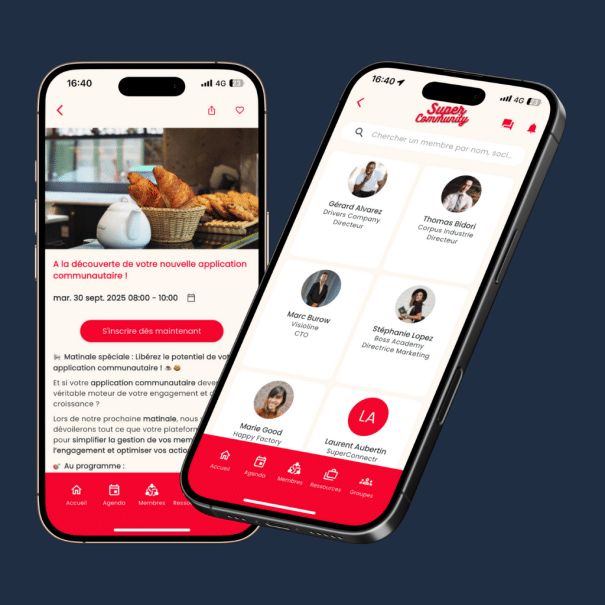
SuperConnectr: All-in-one community platform and application
Membership management software: the complete guide for associations

Membership Management Software: The Complete Guide for Trade Associations, clubs and federations

Today, a member management software is essential for good member management and to turn this administrative task into a formality.

Managing members has become a day-to-day task in its own right, an essential step in structuring, animating and growing your community.

Trade Associations, federations, business clubs or even business groups - all networks today need software to help them manage their members in an efficient and customisable way.

In this reference guide, you will discover everything you need to know to understand, choose and implement a member management tool. Here's what's at stake, the key features, the mistakes to avoid, the tangible benefits and, of course, the best practices for turning your tool into a real community engine.

What is membership management software?

A member management software is a digital solution like SuperConnectr designed to simplify, centralise and automate all member relations tasks of an organisation.

It enablesrecord registrations, manage membership status, collect subscriptions, automate reminders and segment your members and offer each member a secure personal space.

This type of software also offers a global view of the community, makes it easier to run and manage your community activity thanks to dashboards, monitoring indicators and segmentation and targeting tools.

It is aimed at associations, business clubs, federations and networks of public and private players.

Association membership management software

Why has digital membership management become essential?

The digital transformation is affecting all spheres of our personal and professional lives, including the voluntary and community sectors.

In a changing environment, marked by increasing expectations of time saving, fluidity and simplicity,, the membership management is showing its limitations.

No more Excel spreadsheets, no more cash or cheque payments and no more manual e-mail reminders.

As members become increasingly accustomed to fast, digital services in their personal lives, they expect the same efficiency from the communities to which they belong.

They want to be able to register online, pay for their membership in just a few clicksaccess a personal space and automatically receive their receipts or reminders.

For managers, the challenge is twofold: to meet this growing demand, save time and make your data more reliable.

Digitalising member management not only enhances the member experience, but also helps tooptimise internal tasks, strengthen team coordination and better management of associative or community activities thanks to real-time data.

Improved and more professional customer relations

Manage memberships is no longer just about collecting membership fees. It's about creating a real membership experience.

This involves personalising communications (e-mails, push notifications via a mobile application, news feeds, etc.), adapting membership paths, segmenting your base and supporting each member according to their profile, company and expectations.

In this context, the membership management software is becoming a strategic tool. It facilitates the integration of new members, strengthens the link with existing members and encourages long-term commitment. By centralising all interactions and automating contact points, it frees up time allowing teams to focus on higher added-value missions.

Manage members associations communities members form

The essential features of good membership management software.

Membership management software must offer a robust set of functions, while remaining easy to use. Here are the main ones:

  • Customisable application forms to adapt the fields to your community and collect qualified data as soon as you register.

  • Secure online payment With the option of offering a digital payment method, and activating recurring payments or personalised instalments.

  • Automated reminders to avoid forgetting to renew, improve the collection rate and maintain an ongoing relationship with your members.

  • Integrated CRM: Each member has a complete, automatically updated profile sheet, which may be linked to their member company, and a history of participation in your events and consultation of content shared within your community (articles, videos, podcasts, shared documents, etc.).

  • Dynamic segmentation and filters to send targeted communications, personalise access and analyse behaviour by member type.

  • Dashboards and reporting to track the development of your database, view your key indicators, anticipate renewals and manage your business in real time.

The benefits of digital membership management

Switching to digital management of your members' subscriptions means taking a step forward in terms of efficiency, quality of service and professionalism.

Firstly, you save a considerable amount of time by automating administrative tasks. Registrations, payments, reminders and confirmations are carried out without human intervention, drastically reducing errors and oversights.

Your data is centralised, secure and accessible at all times. This gives you a clear, up-to-date view of your community, enabling you to make informed decisions and to demonstrate the impact of your actions to your partners and funders.

Finally, you can boost member satisfaction. Thanks to a fluid interface, useful reminders, a simple personal space and services that are accessible 24/7, you can enhance their commitment and encourage their loyalty.

How do you choose your membership management software?

Choosing a member management software is not something to be taken lightly.

It's a structuring tool that will have an impact on the day-to-day running of your team, the quality of your relationship with members and your long-term results.

First and foremost, you need to define your requirements: are you looking for a tool for collecting membership fees only? Or are you looking for a complete solution for managing members, segmenting your base, managing your community and tracking your indicators?

Then think about evaluating the following criteria:

  • Interface ergonomics: Good software should be simple, customisable and accessible to all profiles (employees, volunteers, members).

  • Customisation: your tool must be able to adapt to your vocabulary, your articles of association, your types of member and your visual identity.

  • Scalability: Check that the solution can support your growth, both in terms of number of members and functionality.

  • Support and guidance: Does the publisher offer training? Responsive support? Accessible documentation?

Take the time to request a demonstration and don't hesitate to involve your team in the final choice.

Community platform - community management software

Frequently asked questions about choosing the right membership management software

What's the best software for managing members?

There is no single answer. It all depends on your type of organisation, your budget and your needs. SuperConnectr is particularly suited to trade associations,federations, the business networks, companies for their customer community or their internal community of employees.

Is it possible to manage members' payments automatically?

Yes, most modern solutions include online payment modules with automatic reminders, renewals and payment tracking. This is a real time-saver, especially if payments need to be adapted to different membership levels depending on the type of member (individuals or companies, for example).

Is a mobile application compulsory? No, but it's a real plus. A community app allows you to stay in touch with your members, send them notifications and increase engagement, make it easier for them to access content, and strengthen the sense of belonging and the image of your organisation, in your members' pockets.

Online community platform

In a nutshell: choosing the right membership management software for your community

Today, the subscriber management can no longer be summed up in an Excel file and a few e-mails. Members' expectations have evolved, the tools have advanced, and the benefits of digitisation have become too obvious to ignore.

With a solution like SuperConnectr, to manage your members and animate your community thanks to a community platform With our all-in-one solution, you can be more efficient, simpler and more personalised. You'll structure your organisation, make the day-to-day work of your teams easier and, above all, offer your members an experience that lives up to their expectations today.

FAQ (Frequently Asked Questions)

What is membership management software?

This is a digital solution for centralising all the information relating to the members of an association: registrations, renewals, subscriptions, personal data, participation history, etc. The right software will help you save time, structure your exchanges and professionalise the management of your community.

Why digitise membership management?

Because manual tools (Excel, paper, email) quickly become time-consuming, error-prone and difficult to use. Software allows you to automate reminders, collect payments, view your statistics and manage your deadlines with peace of mind.

What features are essential in a good membership management tool?

  • Centralised member database
  • Advanced, customisable segmentation of members (individual members and companies)
  • Online payment of contributions
  • Automated renewals
  • Send personalised emails
  • Monitoring statutes and documents
  • Dashboards and data export
  • Manage member companies and attach members

Is it suitable for all types of association?

Yes, whether you are a trade union, a federation, a cluster, a professional association, a business network or a thematic network, software such as SuperConnectr, allows you to adapt membership levels and access rights, and adapt the way you use its member management software.

Can we also manage member companies?

Yes. SuperConnectr lets you link several members to the same structure, manage access rights per company, simplify global renewal, and promote member companies in a dedicated directory.

Does the platform comply with the RGPD?

Absolutely. Your data is secure, hosted in Europe, and managed in compliance with current regulations. You retain ownership of your data, with clear traceability and configurable access rights.

Is it accessible to my members via mobile?

Yes, the SuperConnectr platform is available in a web version and a mobile application, 100 %, which can be customised to your colours. Your members can access their space, pay their subscriptions or consult information from their smartphone.

Discover SuperConnectr community management software!

An All-in-one Community Platform, 100% personalised with your Brand identity.

Give the members of your network a community web Platform and mobile App with your Brand to manage, engage and promote your community!
SuperConnectr: All-in-one community platform and application
Community Management Software: All You Need to Engage Your Network.

Community Management Software: All You Need to Engage Your Network.

A community management software is essential in a world where the human relationship is becoming a real lever for differentiation, all the more so in the age of all-digital technology and AI. 

Because yes, theCommunity Engagement Is No Longer Improvised – It’s Becoming a Profession: Community Building is an Art!

Creating links, maintaining commitment, offering an enriching and regular experience... these are all challenges that only a community management software can help to raise the bar in the long term.

Choose a community management software adapted to your needs is essential for creating a lively and engaged community.

How to choose best community management software to help you manage AND lead your community? Let's find out.

What is community management software?

A community management software such as SuperConnectr is a digital platform that allows you toincrease interaction, distribute content, organise events and engage members of a network or a professional community.

Unlike a community management softwareIt's all about bringing the community to life on a daily basis: sharing, interacting, making connections, emotions. It must offer a fluid, intuitive and personalised user experience.

Community platform - diary and events

Why use community animation software?

  • For maintain the link between members even at a distance

  • For create commitment rituals (posts, content, events, forums...)

  • For promote the content produced, people and actions

  • For measuring community activity and adjust its actions

In short, good community animation software transforms a group of members into a real, living, mobilised community.

The key features for managing your community effectively

A good community management software must above all enable you to offer your members a wide range of activities.

1. A customisable news feed

This is the heart of the site. It allows you to publish information, photos, videos, news or announcements, and enables members to :

  • React, comment and share with other members
  • Mention other members
  • Follow publications by group or theme

2. Events to mark the rhythm of community life

  • Creation of a community diary
  • Online registration / deregistration
  • Speakers, venue, programme, partners
  • List of participants to facilitate identification and networking
  • Export the event to your members' personal or professional calendars

3. A structuring content module

Centralise, classify and promote your community content:

  • Articles, videos/replays, podcasts, documents, shared reports...
  • Search by keyword, theme or tag

4. Communication channels between members

  • Instant, private or group messaging for a discussion with several members
  • Discussion forums for structured exchanges on a variety of topics

5. A community emailing tool

  • Transactional emails (registrations, reminders, confirmations, etc.)
  • Targeted newsletters to bring your members back to your community content
  • Customisable templates in your community's colours

6. An activity dashboard

  • Who publishes? Who is commenting? Who is no longer online?
  • What is the trend in the number of visits? Are they coming from your community platform or your community application?
  • What content is most popular?
Online community platform

To sum up: choosing the right community management software for your network

A community management software is not a luxury: it's a catalyst.

Community management software integrated into a online community platform can transform a dispersed group into a real force, where everyone finds their place, shares, learns and connects with others.

With a solution like SuperConnectr,You'll have your own personalised community space that you can manage on a day-to-day basis.

FAQ (Frequently Asked Questions)

What is community management software?

It's a tool that centralises all the resources needed to manage, structure and lead an online community. It allows you to publish content, send targeted communications, organise events, keep groups alive, monitor engagement... and above all create a real link between members.

What's the difference between traditional CRM and community software?

A CRM focuses on customer relations. Community software, on the other hand, focuses on interaction between members, content creation, co-construction and ongoing animation. It is a more conversational, participative and relational tool.

Why use dedicated software to run my community?

Because managing groups on LinkedIn, Google Forms, Excel spreadsheets and manual emails quickly becomes time-consuming. Software like SuperConnectr, allows you to structure your activities, personalise your platform with your brand universe, segment your members, automate tasks and keep track of all community activity.

What features are essential for running a successful network?

  • Community news feed

  • Internal messaging and notifications

  • Thematic groups and private areas

  • Event management with registration

  • Publication of rich content (documents, videos, podcasts)

  • Editorial calendar and engagement dashboards

  • Members and partners directory

  • Transactional emails and targeted campaigns

Is this useful for a BtoB network?

In fact, it's essential! In a B2B network, the value is based on connections, the circulation of information, feedback, member visibility and the organisation of events. Community management software helps you to professionalise your approach and strengthen member loyalty.

Can I customise the platform to reflect my network?

Yes, entirely. SuperConnectr is available in white markingIt can be personalised with your graphic charter, logo, colours and tone. It's a space that conveys your identity, developing a sense of belonging and consistency in your communications.

Is there a mobile version?

Yes, a community mobile application is available to your members. They can interact anywhere, anytime: receive push notifications, register for an event, post to a group... directly from their smartphone.

Discover the SuperConnectr community platform!

An All-in-one Community Platform, 100% personalised with your Brand identity.

Give the members of your network a community web Platform and mobile App with your Brand to manage, engage and promote your community!
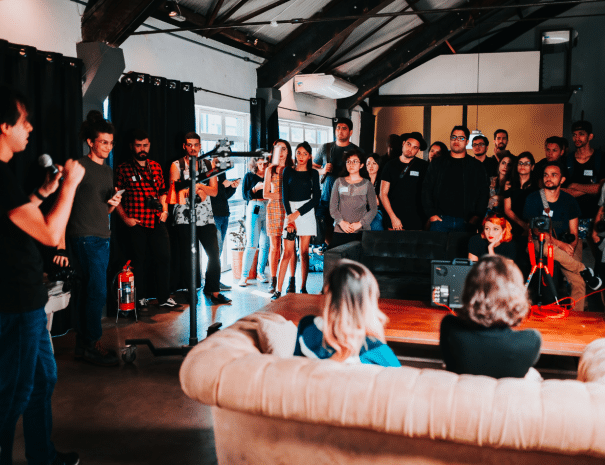
SuperConnectr: All-in-one community platform and application